Blood Transfusion Set Procurement Guide for Hospitals in India

A B2B guide to filter specifications, tender checks, documentation and repeat supply for blood administration sets.

For hospital procurement teams, blood banks, distributors and tender buyers, a blood transfusion set should be evaluated as a defined medical-device configuration rather than a generic tubing item. The filter range, drip chamber, spike, clamp, tubing, sterility, packaging and supporting documentation all matter when comparing institutional quotations.

This guide focuses on procurement and supplier evaluation for blood administration sets in India. It is not a transfusion protocol or clinical-use guide. Clinical selection and use remain the responsibility of trained healthcare professionals following applicable institutional procedures and the current instructions for use.

Why the filter specification deserves attention

A blood transfusion set includes a filter intended to retain gross clot, fibrin strands and cellular aggregates before blood or blood components reach the patient line. Procurement teams should record the exact documented filter range rather than accepting a vague statement such as “standard blood filter.”

Sicher Medik’s Neofluss Red® blood transfusion set is documented with an integrated 170–260 micron filter. Its current product information also lists a transparent drip chamber, spike, roller clamp and tubing for blood and blood-component administration. Buyers should compare the current specification sheet with their institutional or tender requirement before approval.

1. Compare the complete configuration, not only the filter

Filter range is important, but a purchasing decision should also confirm the full set. Check the container connection, drip chamber visibility, clamp arrangement, tubing, distal connection, sterility, single-use status and package presentation. If a tender names a required configuration, the quotation should identify the exact model being offered.

Do not assume that all transfusion sets are interchangeable because they appear similar in a catalogue. Small differences in connectors, tubing, packaging or documentation can matter to a hospital standardisation programme.

2. Verify the intended product category

A blood transfusion set is not the same as a routine IV infusion set. It is intended for professional administration of blood and blood components through an appropriate vascular access route under established transfusion protocols. Procurement teams should therefore keep blood-administration sets, standard infusion sets and measured-volume burette sets as separate line items.

This separation is especially useful for central purchasing teams managing large catalogues because it reduces accidental substitution and helps each clinical department receive the approved device type.

3. Confirm sterility and single-use status from current documentation

Institutional buyers should verify sterility and single-use status from the current manufacturer documentation rather than assuming these characteristics from packaging appearance. Neofluss Red® is documented as sterile and single use. If the hospital tender requires a particular packaging statement, shelf-life statement or sterilisation documentation, request the current approved record from the supplier.

Do not rely on copied values from an old tender or distributor catalogue when current procurement documentation is available.
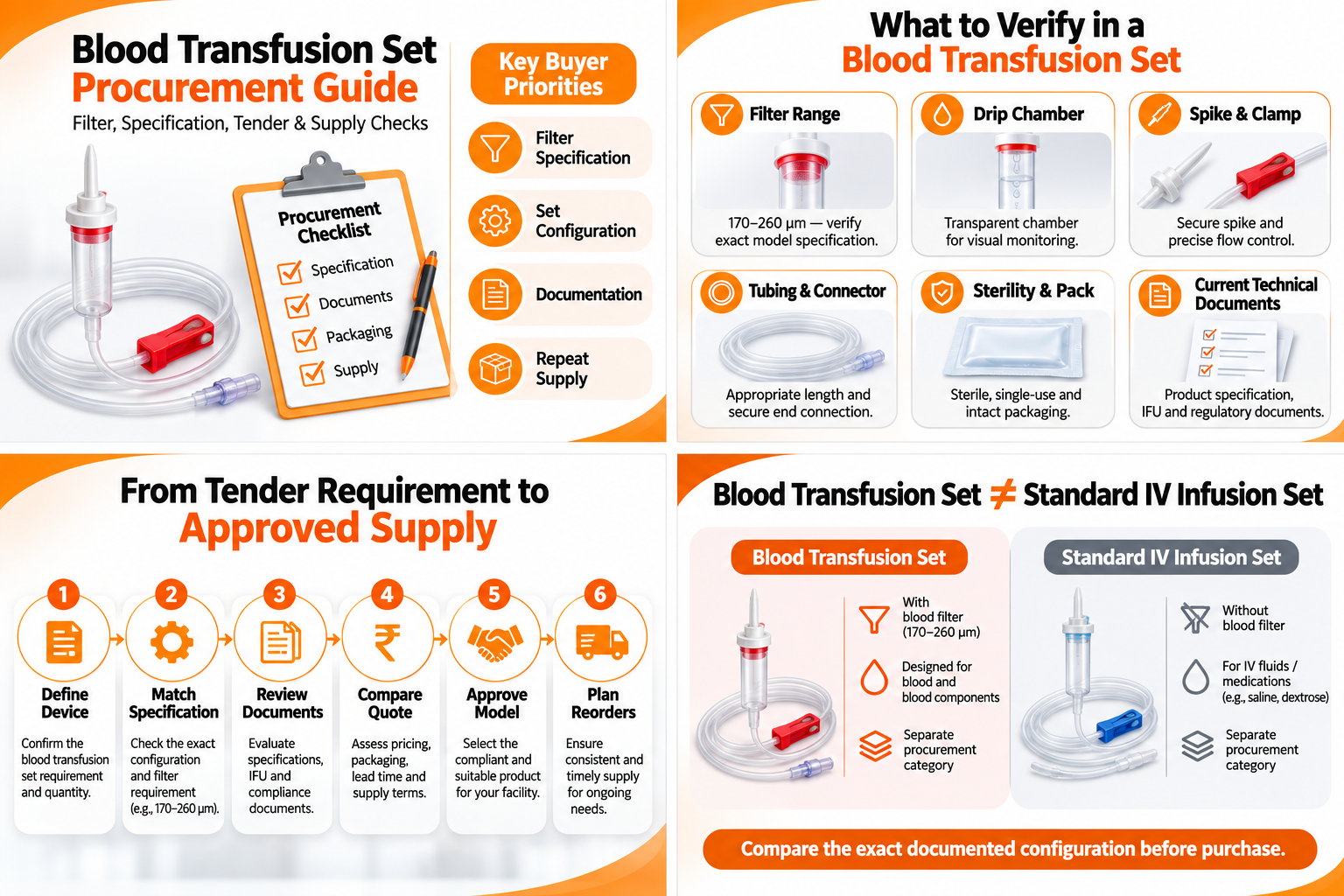
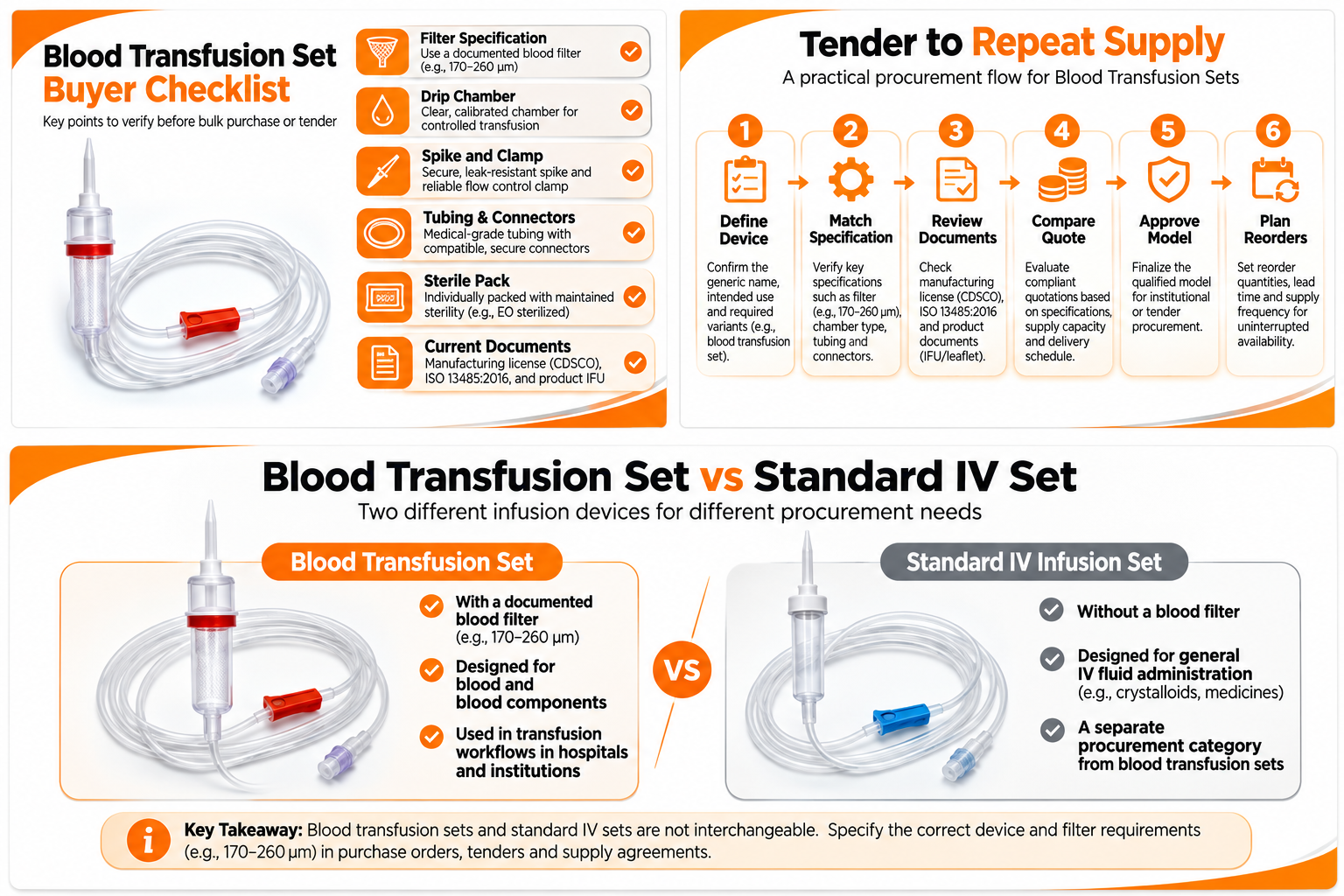
Blood transfusion set procurement guide for hospital and tender buyersBlood transfusion set buyer checklist and supply workflow

4. Build a technical tender checklist

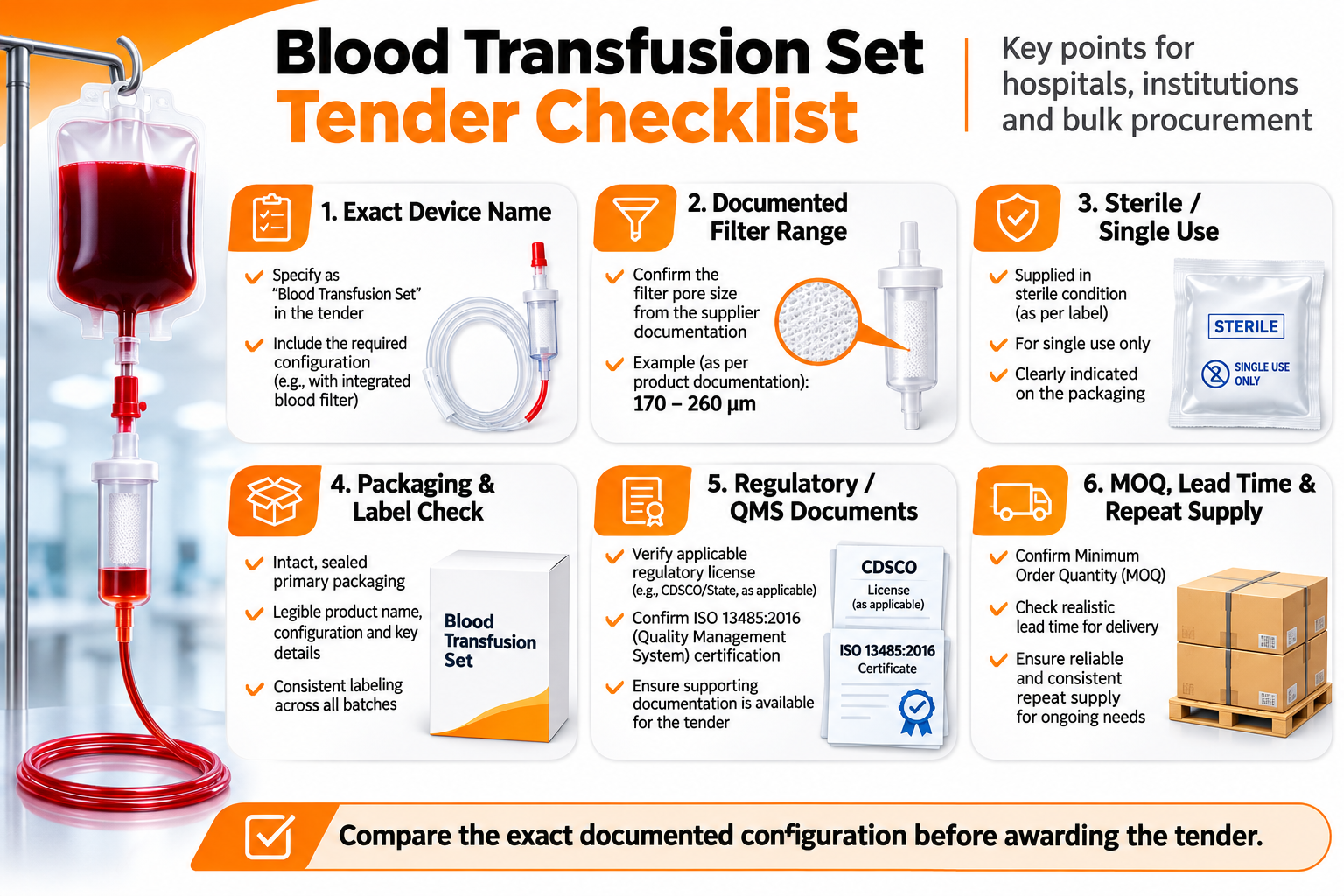
A practical blood transfusion-set tender checklist can include the generic device name, filter range, spike configuration, drip chamber, tubing, clamp, connector requirement, sterility, single-use status, pack format, required regulatory documents, quantity, destination and delivery schedule.

For Neofluss Red®, the current Sicher Medik product page documents medical-grade PVC and ABS, a 170–260 micron filter range, sterile single-use status and the product code SCMBLS. Buyers should still confirm the latest technical sheet before incorporating any model-specific detail into a tender.

5. Separate manufacturer credentials from product-specific evidence

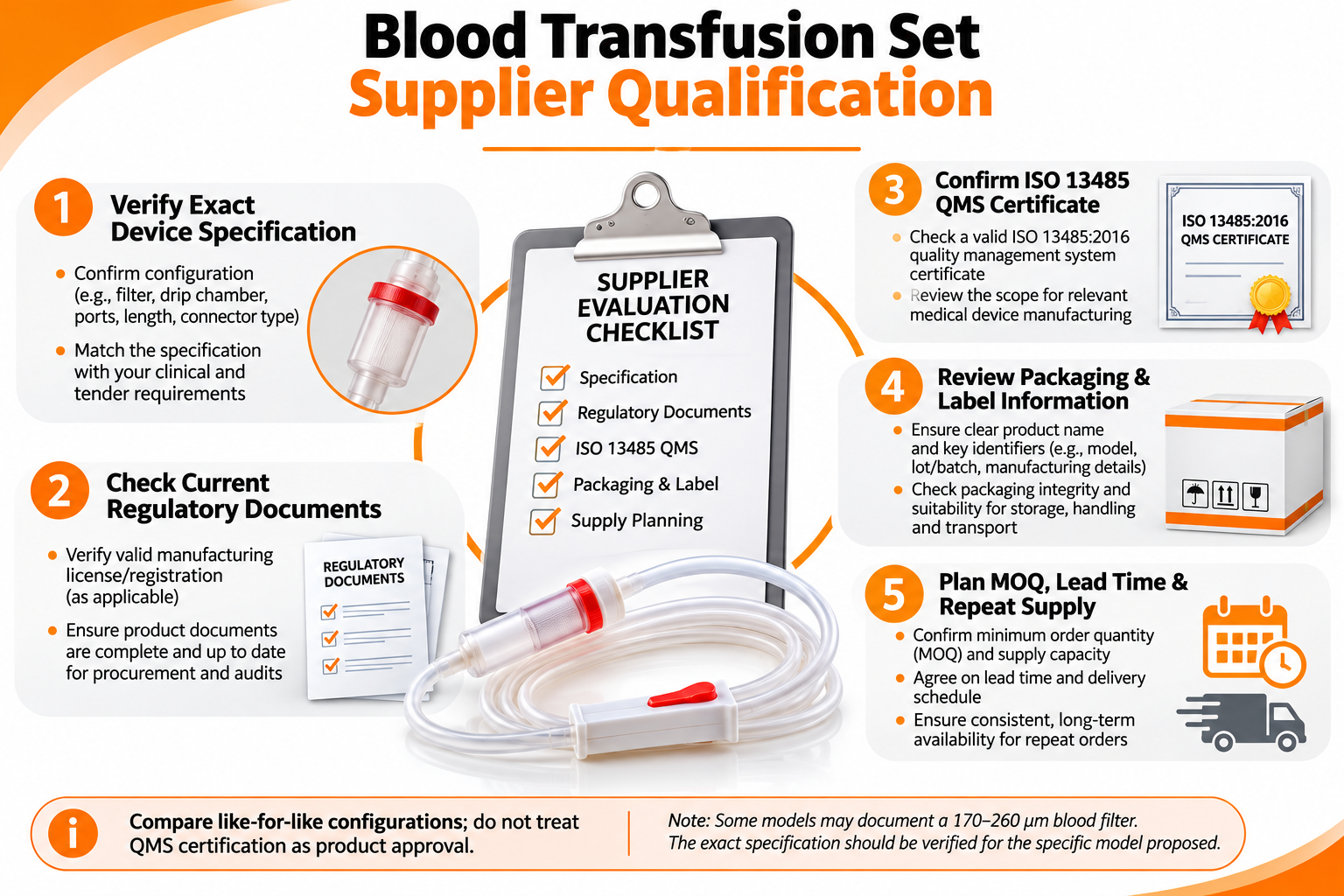
Sicher Medik states that it operates under an ISO 13485:2016 certified quality management system and manufactures at a CDSCO-licensed medical device manufacturing facility in India. These are relevant supplier-qualification credentials, but they do not remove the need to verify the product-specific documentation requested by the hospital, distributor or tender authority.

For a strong audit trail, keep the current certificate, applicable manufacturing or regulatory documents, technical specification, quotation and packaging information together with the approved supplier record.

6. Compare the commercial offer on the same specification

Unit price is meaningful only when suppliers are quoting against the same requirement. Confirm the exact model, packing quantity, MOQ, GST treatment, freight responsibility, lead time, delivery location, quotation validity and payment terms. If one supplier proposes a different configuration, request the differences in writing before comparing price.

For recurring institutional supply, also discuss forecast volumes and delivery frequency. This gives the manufacturer a clearer basis for production and packaging planning and gives the buyer a better view of repeat-supply capability.

7. Plan for distributor, OEM and private-label requirements early

Distributors and brand owners may need artwork, label, carton or private-label arrangements. Sicher Medik indicates that OEM and private-label supply may be considered for eligible bulk orders, subject to quantity, technical feasibility and commercial agreement. These requirements should be raised before production planning so feasibility, documentation and packaging can be reviewed together.

8. Keep the approved specification for repeat orders

Once a hospital or distributor approves a transfusion-set configuration, retain the exact model, technical sheet, pack details and agreed commercial conditions in the purchasing record. Reorders can then be checked against the same reference instead of restarting the comparison from a generic description.

Frequently asked questions

What filter range is documented for Neofluss Red®?

The current Sicher Medik product information documents an integrated 170–260 micron filter. Buyers should confirm the latest technical sheet when preparing a tender or bulk order.

Is a blood transfusion set the same as an IV infusion set?

No. A blood transfusion set is a distinct blood-administration device and should be procured as a separate product category.

What should hospitals include in a blood transfusion-set RFQ?

Include the generic device name, filter specification, required configuration, sterility, packaging, quantity, delivery location, required documents and quotation deadline.

Should ISO 13485 replace product-specific tender documents?

No. ISO 13485 is a quality-management-system standard. Buyers should still verify the product-specific technical and regulatory documents required by their procurement process.

Can blood transfusion sets be supplied for OEM or private-label orders?

Eligible OEM or private-label requirements can be discussed with Sicher Medik, subject to product, quantity, technical feasibility and commercial agreement.

Blood transfusion set tender checklist covering filter, packaging and documentsBlood transfusion set supplier qualification checklist

Conclusion: compare like-for-like before awarding a tender

A strong blood transfusion-set procurement process starts with the exact device specification and then compares supplier documentation, packaging, commercial terms and repeat-supply capability. For institutional buyers, the key is to compare the same technical configuration across all quotations.

Hospitals, distributors and tender buyers can review the Neofluss Red® blood transfusion set and contact Sicher Medik for current specifications, documentation, packing, MOQ and B2B quotations.