
CDSCO Class A, B, C & D Medical Devices: Procurement Guide
A practical overview of India’s risk classes, licensing authorities and document checks for distributors and hospital procurement teams.
Medical-device procurement in India becomes easier when buyers understand the difference between device risk class, manufacturing licensing authority and the product-specific documents required for a purchase. The Medical Devices Rules, 2017 use a four-class risk system: Class A, B, C and D.
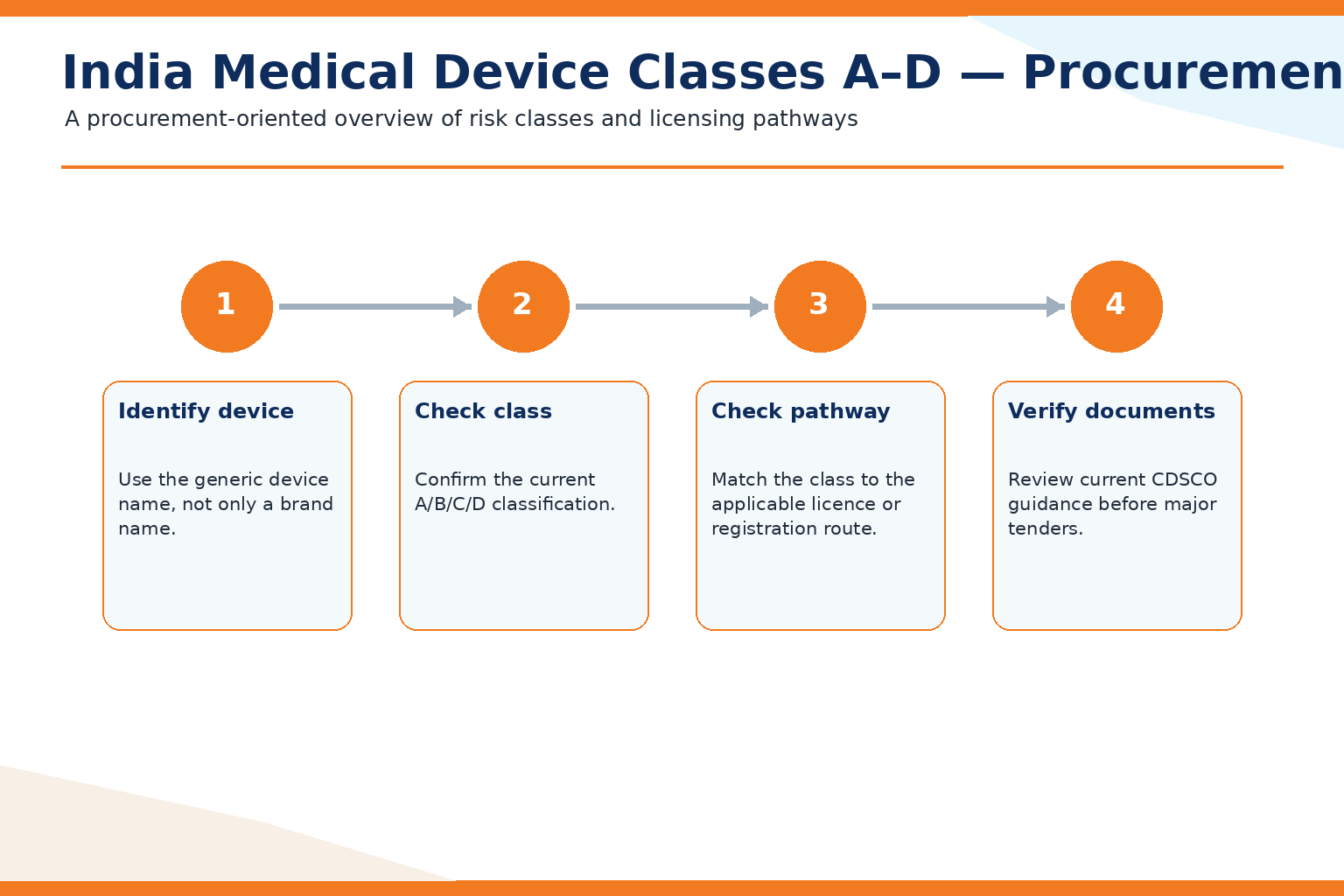
This guide is written for distributors, hospital procurement teams and B2B buyers. It is a practical overview, not legal advice. Because classifications and regulatory pathways can be updated, buyers should verify the current CDSCO classification list and applicable licensing documents for the exact device before tender approval.
How India classifies medical devices
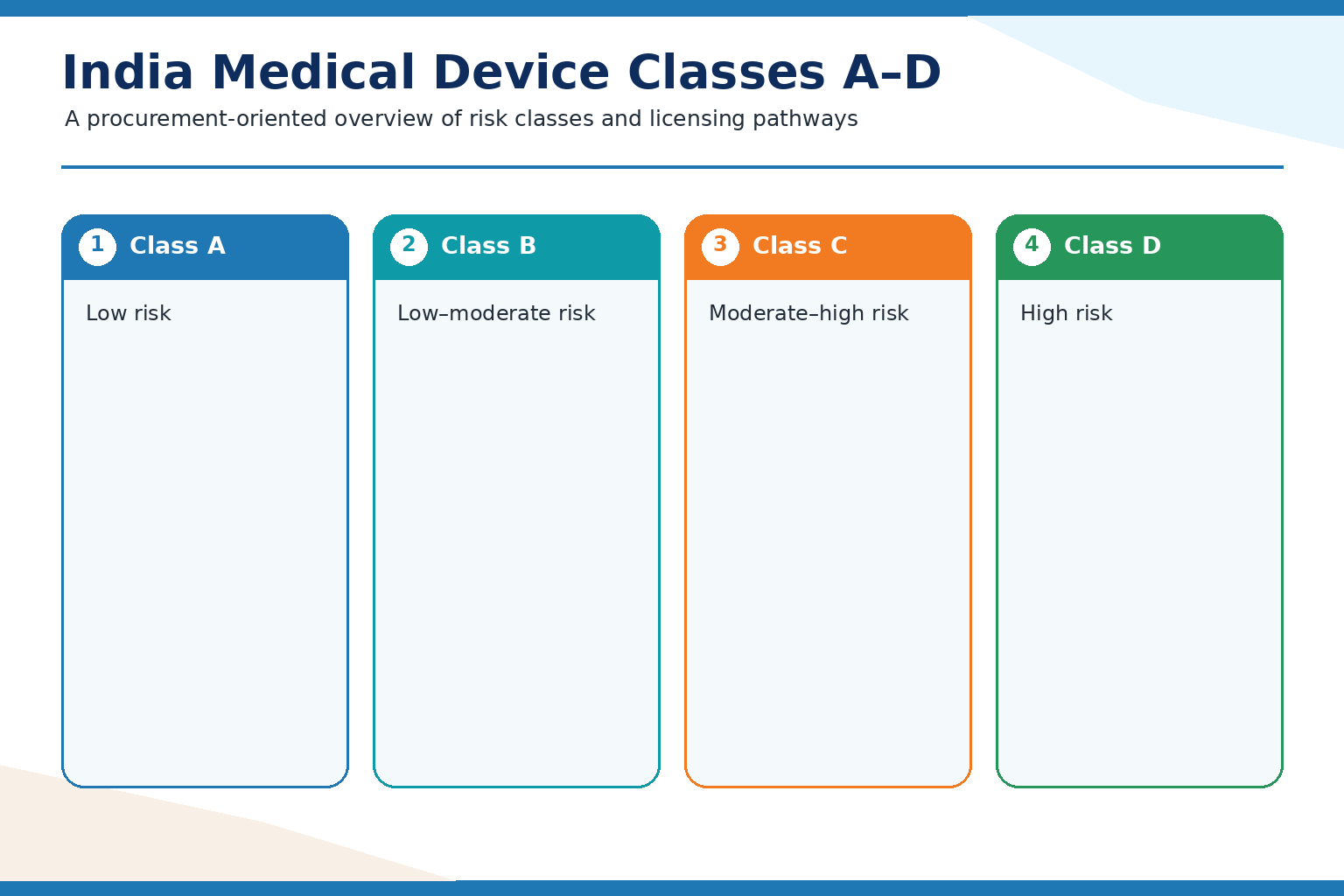
CDSCO describes the four risk classes as Class A — low risk, Class B — low-moderate risk, Class C — moderate-high risk and Class D — high risk. The Central Licensing Authority publishes risk-based classification lists and is the competent authority for classification under the Medical Devices Rules, 2017.
1. Class A and Class B manufacturing licensing
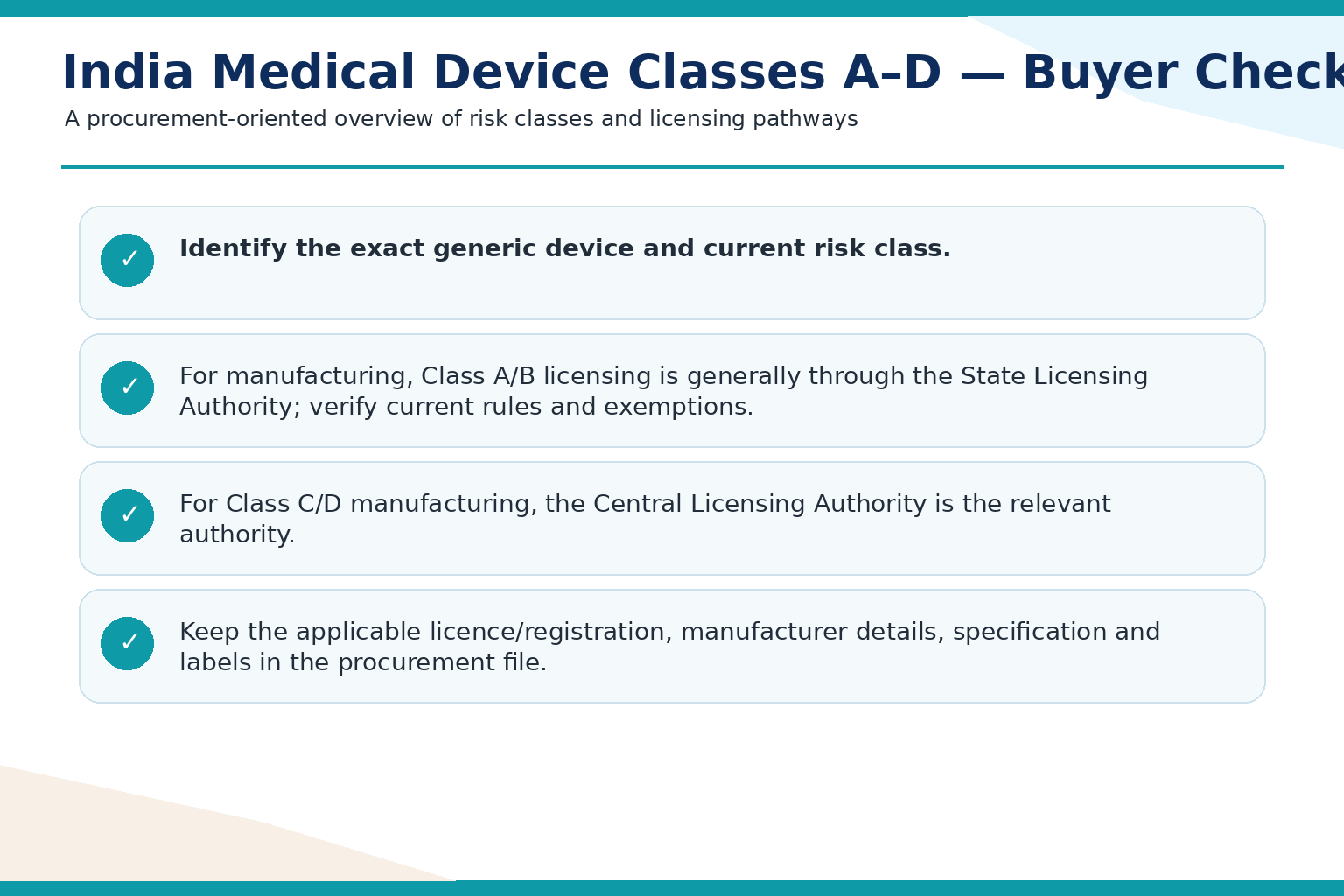
For Class A devices other than the separately exempted non-sterile/non-measuring category, and for Class B devices, manufacturing licence applications are handled through the State Licensing Authority for the jurisdiction where the manufacturing premises is located.
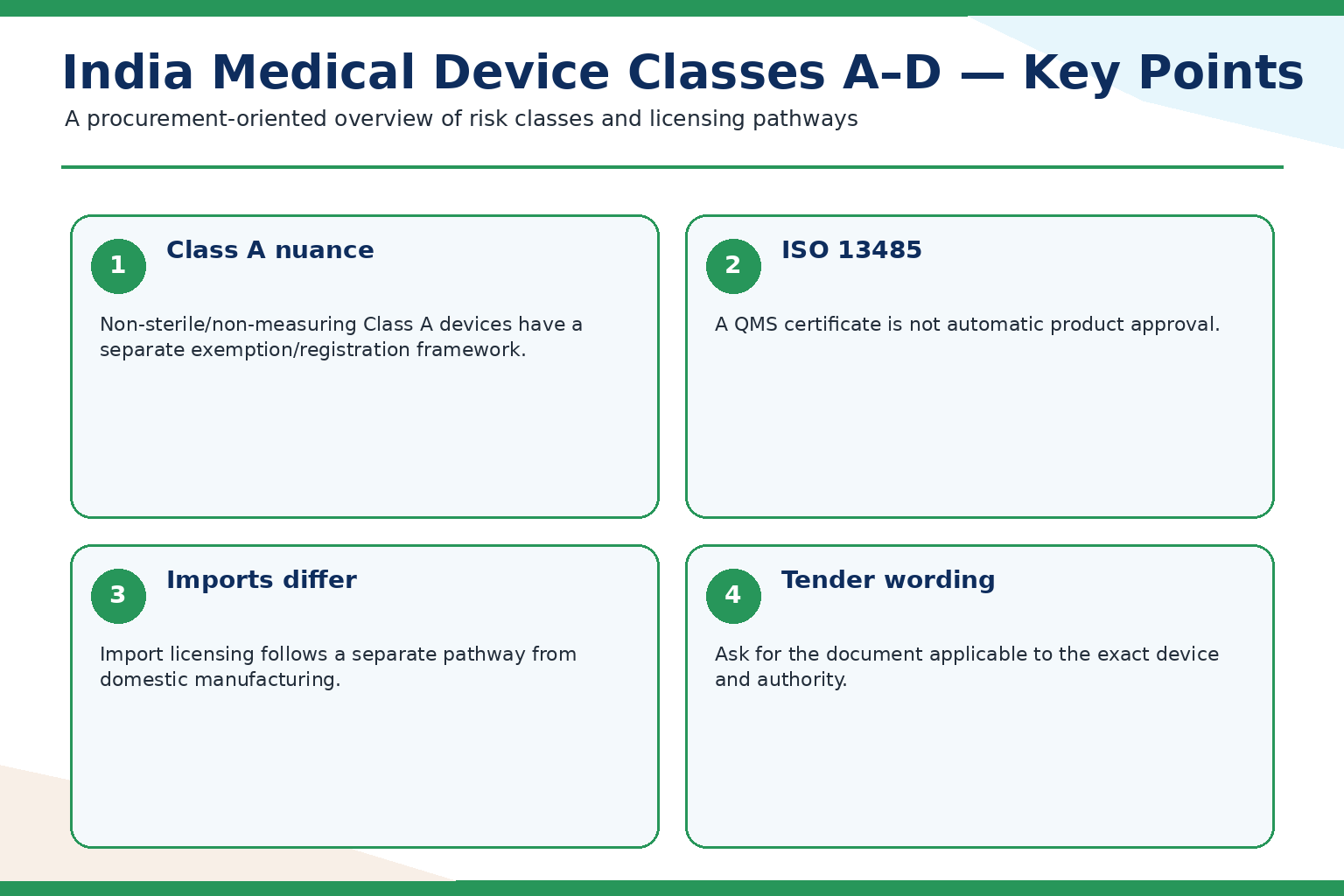
Class A non-sterile and non-measuring medical devices have a separate exemption/registration framework under the 2022 amendment. Procurement teams should verify the current notification and registration requirements rather than applying a blanket statement that every Class A product follows exactly the same route.
2. Class C and Class D manufacturing licensing
Manufacturing licensing for Class C and Class D devices is handled by the Central Licensing Authority. These higher-risk classes follow a different route from Class A/B manufacturing licensing.
The distinction matters in procurement because asking only for a “CDSCO licence” without understanding the applicable authority can produce confusing or incorrect documentation requests.
3. Import licensing is a separate question
Imported medical devices have their own licensing pathway. A distributor buying imported products should check the applicable import licence and product documentation rather than assuming that a domestic manufacturing licence covers the same regulatory role.
4. Sale and distribution requirements also matter
Hospitals and distributors should verify that products are being supplied through the legally appropriate route. Current CDSCO communications emphasise that procurement agencies should require the relevant licence or approval from the competent licensing authority for devices subject to licensing, while separately considering applicable exemptions and registrations.