
HME vs BVF vs HMEF Breathing Filters: Procurement Guide
How hospital and distributor buyers can compare breathing-filter functions, compatibility, documentation and bulk-supply requirements.
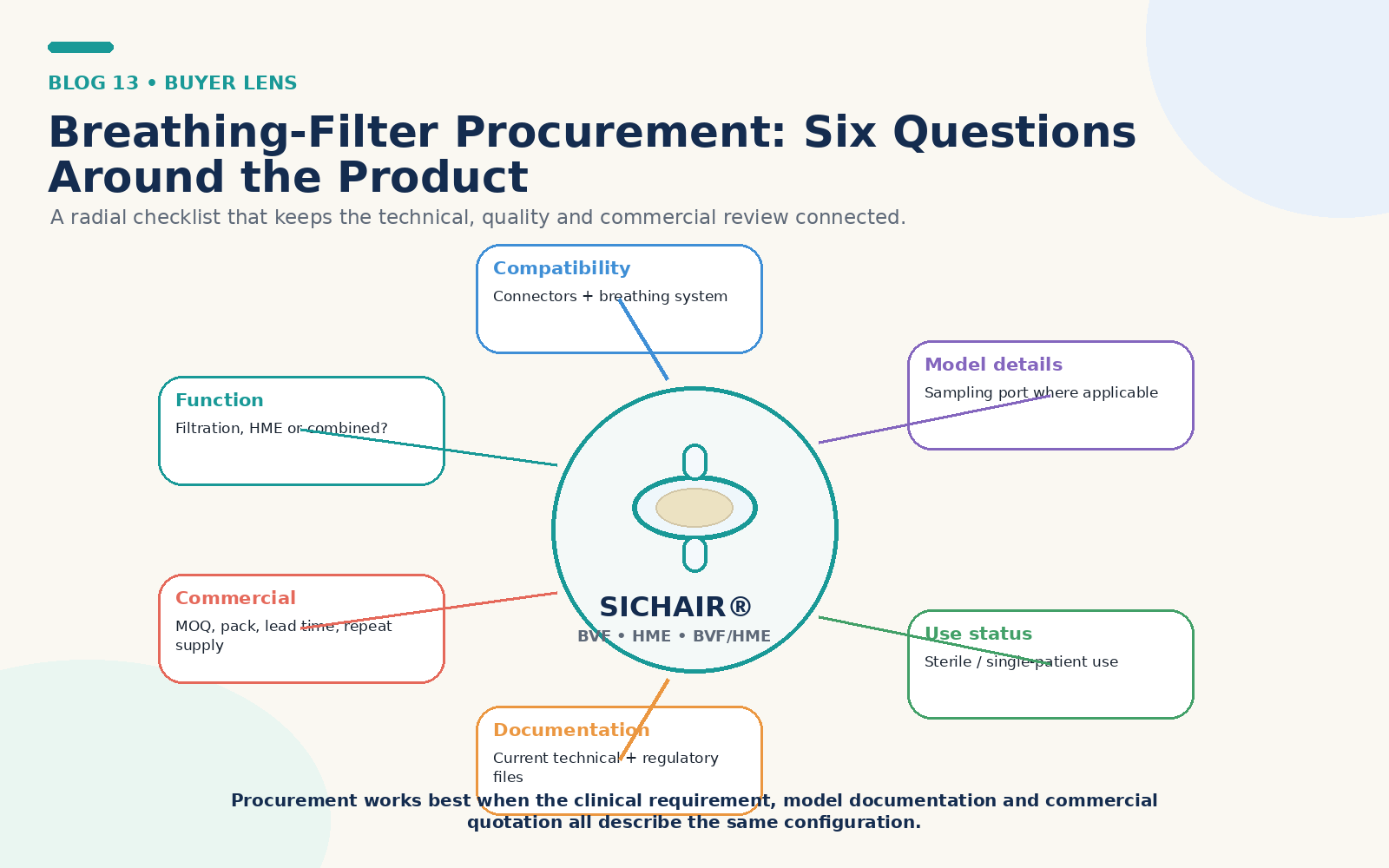
Breathing-system filters are often grouped together in hospital catalogues, but BVF, HME and HMEF are not interchangeable terms. For ICU, anaesthesia and respiratory-care procurement, the buyer needs to know which function is required, how the device connects to the breathing system, what documentation supports the quoted model and whether the selected filter is compatible with the intended equipment.
This guide is written for hospital materials teams, distributors, biomedical departments and tender buyers comparing breathing filters in India. It is a procurement guide, not clinical treatment advice.
What is the difference between BVF, HME and HMEF?
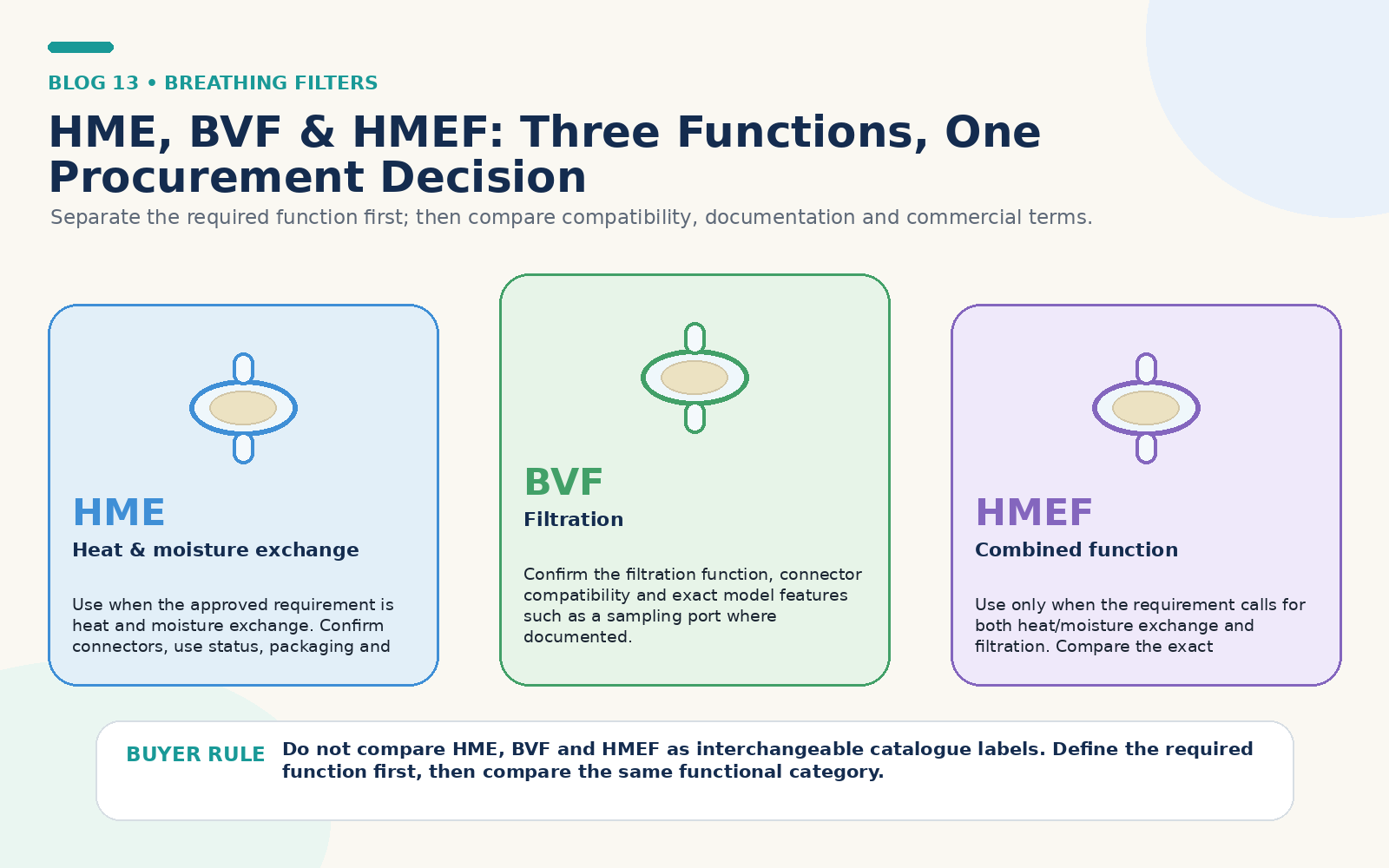
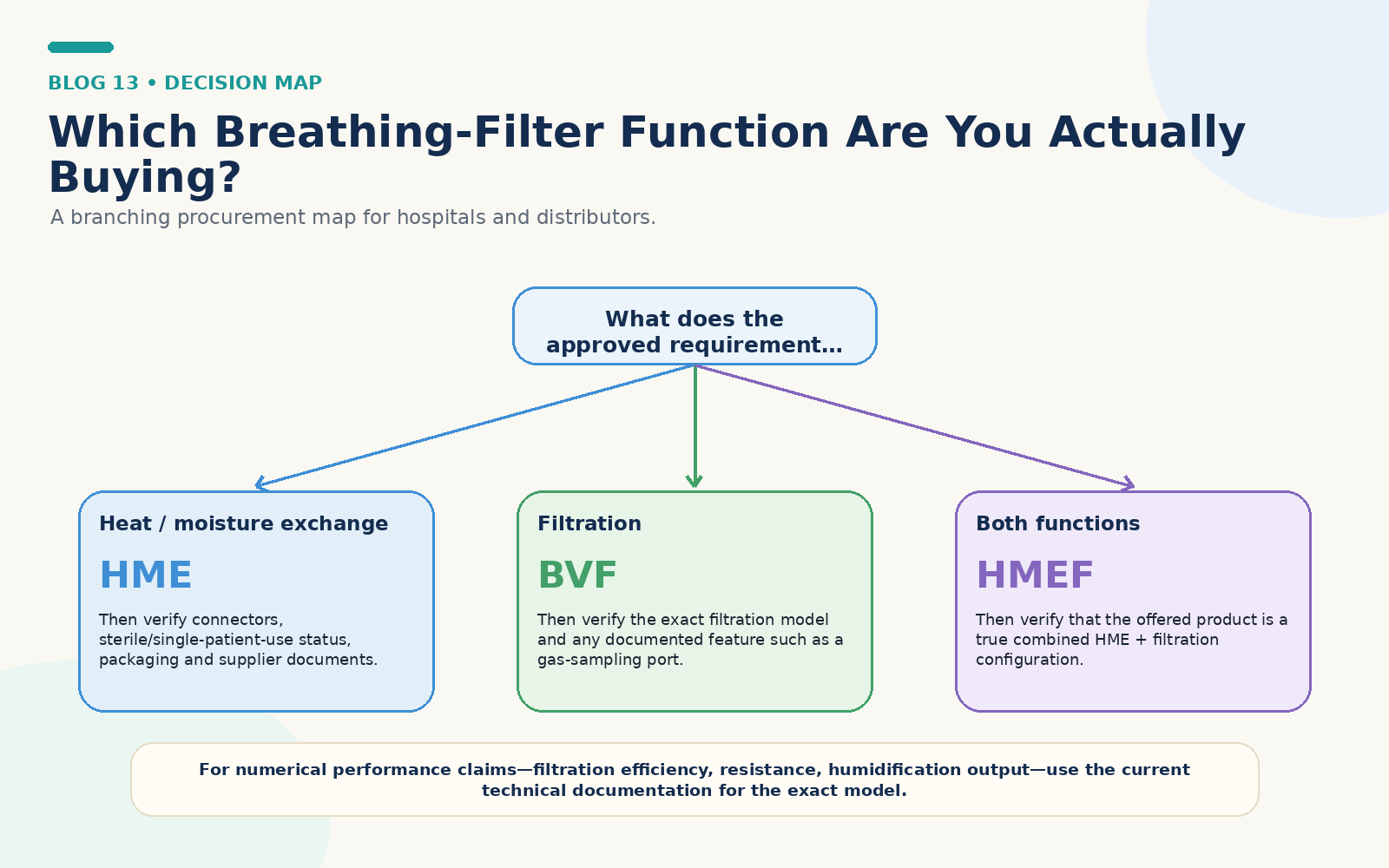
A BVF is a bacterial/viral filter. An HME is a heat and moisture exchanger. An HMEF combines filtration with heat-and-moisture exchange. These labels describe different functions, so a tender should not treat them as synonyms.
Sicher Medik’s Sichair® range includes BVF, HME and combined BVF/HME variants. The current product information documents electrostatic filter media for the BVF variant, a gas-sampling port on the BVF housing, heat-and-moisture exchange function for the HME variant and a combined filtration/HME configuration for the BVF/HME version.
1. Start with the required function
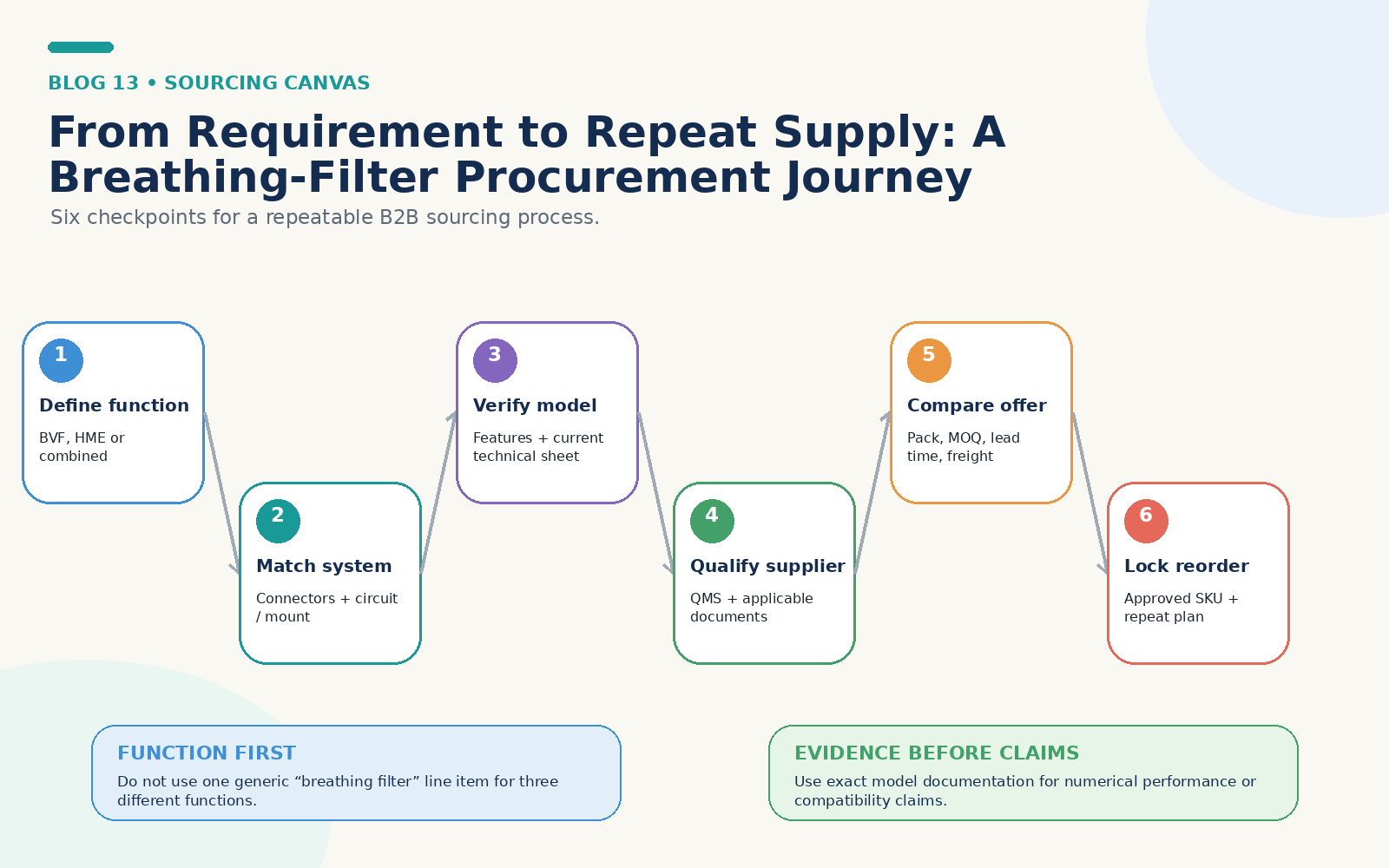
Before requesting a quotation, identify whether the requirement is filtration, heat-and-moisture exchange or a combined function. This helps avoid a common procurement problem: comparing products that carry similar category names but do different jobs within the breathing circuit.
The clinical team should define the intended configuration. Procurement can then compare supplier documentation against that requirement.
2. Check connector and system compatibility
A breathing filter forms part of a larger respiratory system. Buyers should therefore verify connection compatibility with the approved ventilator circuit, catheter mount or anaesthesia circuit rather than purchasing by filter name alone. If the tender specifies a gas-sampling feature, confirm that it is present on the exact model being quoted.
For related respiratory products, procurement teams can also review Sicher Medik’s Ventofluss® ventilator circuits and Sichmount® catheter mounts.
3. Avoid unsupported performance assumptions
Do not infer filtration efficiency percentages, dead-space values, resistance, humidification output or infection-prevention performance unless those parameters are stated in the current technical documentation for the exact model. Generic values from another brand or product family should not be copied into a tender response.
This distinction is important because procurement language can easily become stronger than the evidence. A product category can describe its intended function without proving a specific numerical performance level.