
Medical Consumables Distribution in India: Distributor Partnership Guide
A practical B2B guide for dealers, regional distributors, hospital suppliers and institutional buyers building reliable medical consumables partnerships in India.
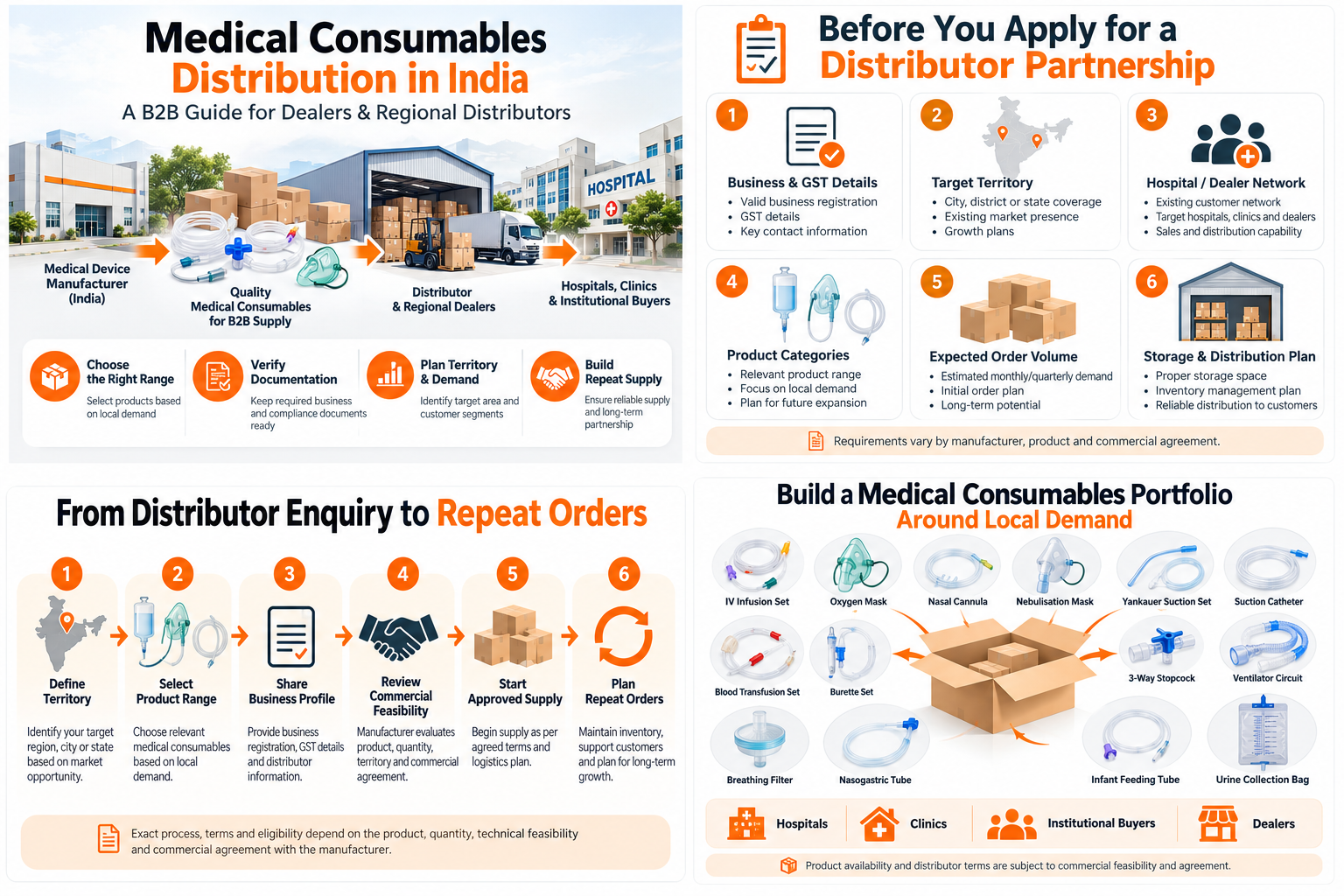
India’s medical-consumables market is large, fragmented and highly service-sensitive. A distributor is not simply a reseller: the right partner converts product availability into reliable local coverage, handles day-to-day buyer communication and helps hospitals, clinics and institutional purchasers receive the correct product at the required time. For manufacturers and importers, that makes distributor selection a quality-and-continuity decision as much as a sales decision.
This guide explains a practical B2B framework for building medical consumables distribution in India. It is intended for manufacturers, dealers, regional distributors, hospital suppliers and procurement teams. Regulatory obligations differ by device, activity and state, so each party should confirm the requirements that apply to its own role before trading.
1. Define the channel role before selecting a partner
Start by writing down what the distributor must actually do. A national stockist, a regional dealer, a tender-focused supplier and a hospital-facing sales partner solve different problems. Ambiguity at this stage usually becomes conflict later.
A clear channel brief also prevents accidental overlap. If two partners approach the same account with different prices, the immediate result may be a sale, but the long-term result is usually margin erosion and loss of trust.
2. Match the portfolio to local demand
Medical consumables should be selected by clinical use, reorder pattern and local buyer profile—not by catalogue size alone. A focused starter portfolio is easier to train, stock and replenish than dozens of unrelated items.
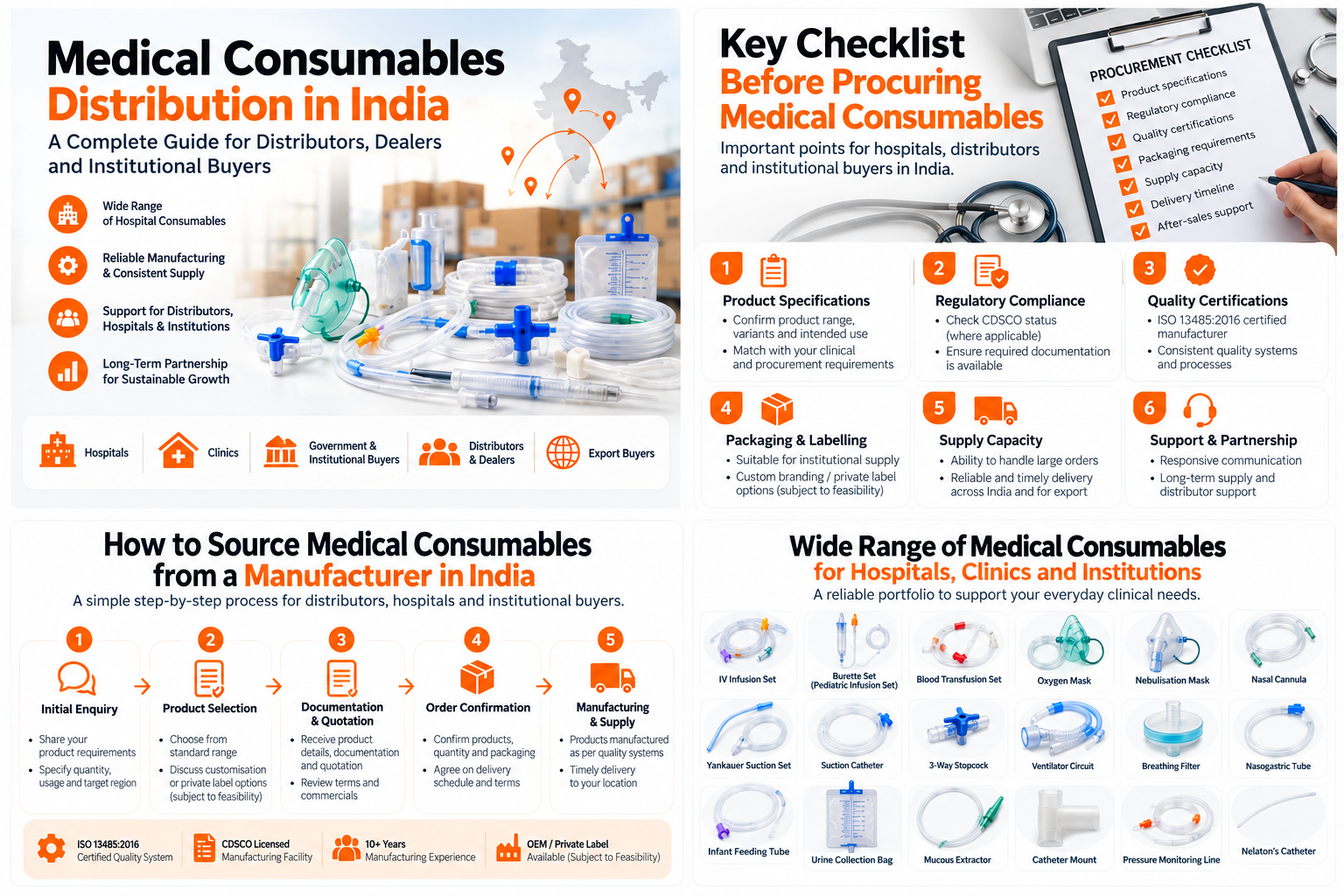
For infusion and fluid-management demand, a distributor might begin with an intravenous infusion set, burette set and blood transfusion set. Respiratory buyers may require an oxygen mask, nasal cannula and nebulisation mask. Urology, feeding and suction portfolios can be built around products such as the urine bag, nasogastric tube, suction catheter and Yankauer suction set.
For every proposed SKU, estimate monthly demand, pack size, lead time, minimum order quantity, shelf life and storage requirements. These variables determine working capital and reorder points. They also expose whether the proposed territory can support the portfolio economically.
3. Qualify the manufacturer and distributor with evidence
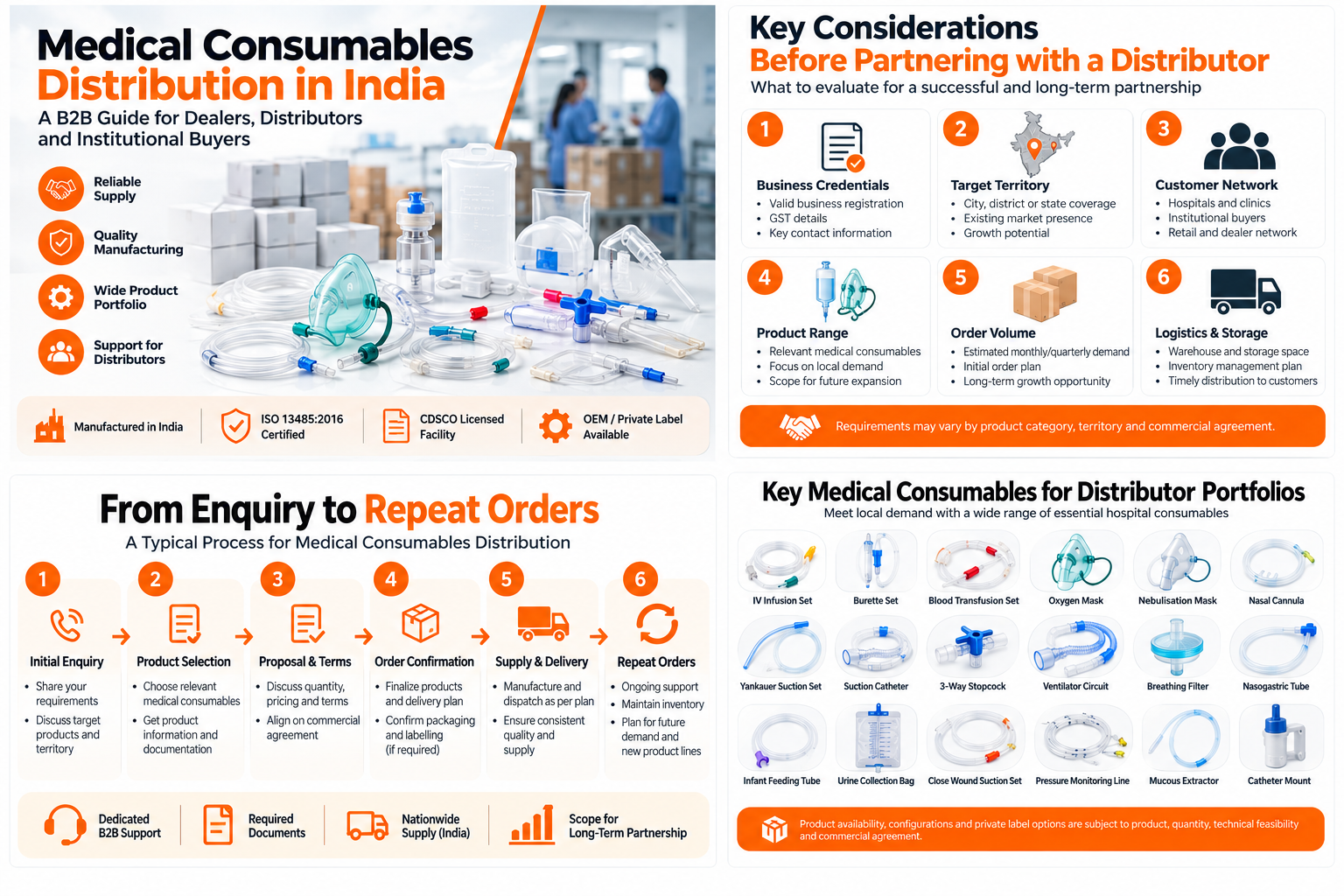
Before discussing exclusivity, both sides should complete due diligence. A buyer should verify the product identity, intended use, label, packaging configuration, manufacturing source and applicable licences or registrations. A manufacturer should verify the distributor’s legal entity, premises, relevant permissions, customer reach, storage controls and complaint-handling process.
Use official sources rather than copied certificates or sales claims. Review the current CDSCO Medical Devices Rules and applicable central or state requirements. Where a supplier states that it operates an ISO 13485 quality-management system, validate the certificate scope, issuing body, site address and validity; the standard itself is maintained by ISO.
Useful qualification records include approved product specifications, certificates of analysis or conformity where relevant, sterilisation and shelf-life evidence, change-notification rules, batch traceability, complaint escalation contacts and recall responsibilities. The goal is not paperwork for its own sake. It is the ability to identify what was supplied, where it went and how the parties will respond if a problem occurs.