.svg)

Medical Consumables Tender & Bulk Procurement Guide for India
A practical B2B guide for hospitals, distributors, institutional buyers and tender teams sourcing medical consumables in India
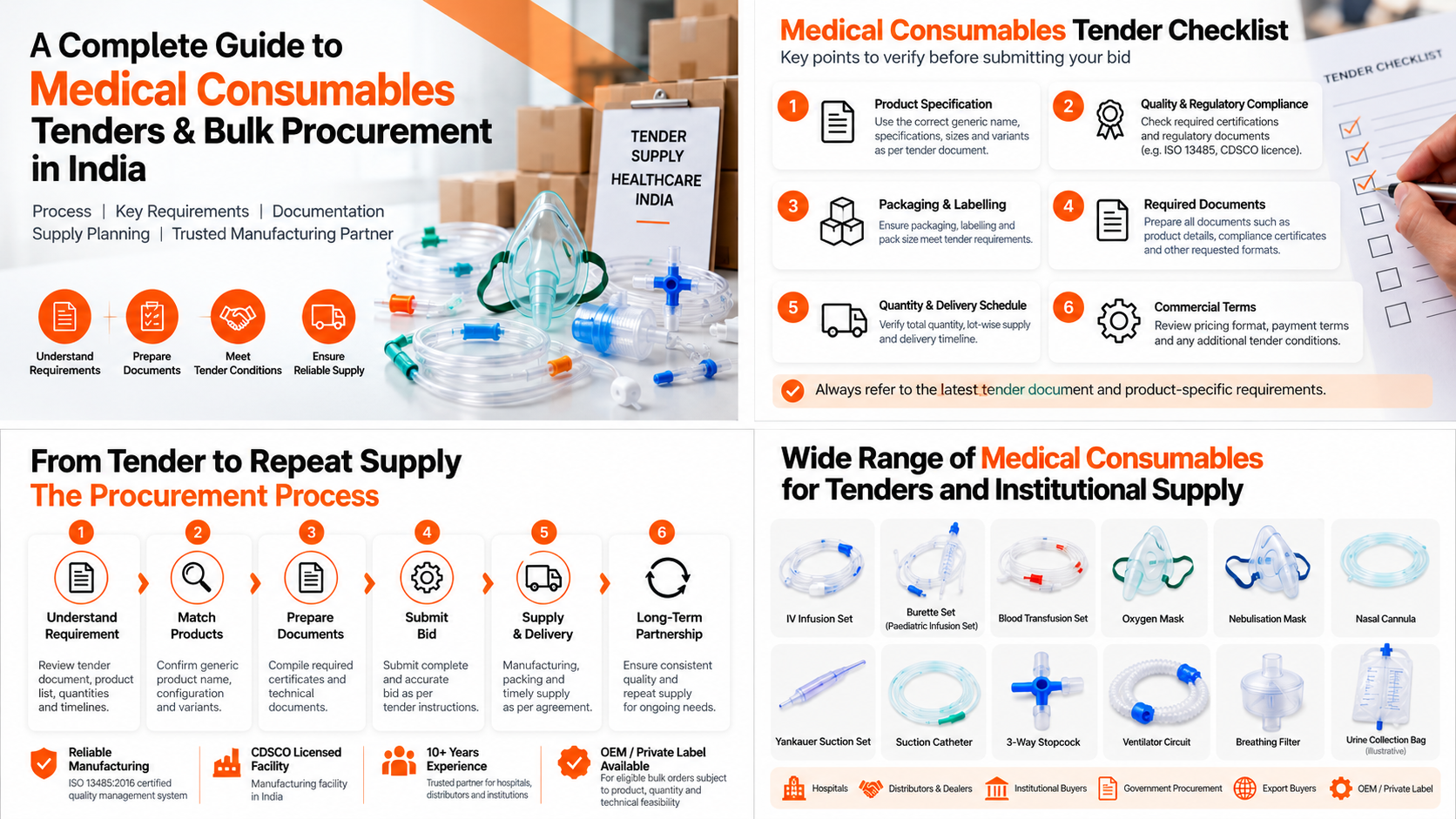
Medical consumables tenders and institutional bulk orders require more than a competitive unit price. Hospitals, distributors, government procurement teams and other institutional buyers need to match the exact product requirement, documentation, packaging, quantities and delivery conditions stated in the current bid or purchase specification.
Recent Indian procurement listings continue to include surgical and medical consumables across respiratory, urology, infusion and related hospital categories. This makes medical consumables tender procurement in India commercially important for manufacturers and distributors, but every bid must be assessed against its own current documents and product-specific conditions.
Why tender procurement needs a product-by-product approach
A tender may group many hospital consumables in one procurement while specifying different configurations, documents, quantities and delivery requirements for individual line items. Buyers and bidders should therefore avoid assuming that one generic specification applies across an entire category.
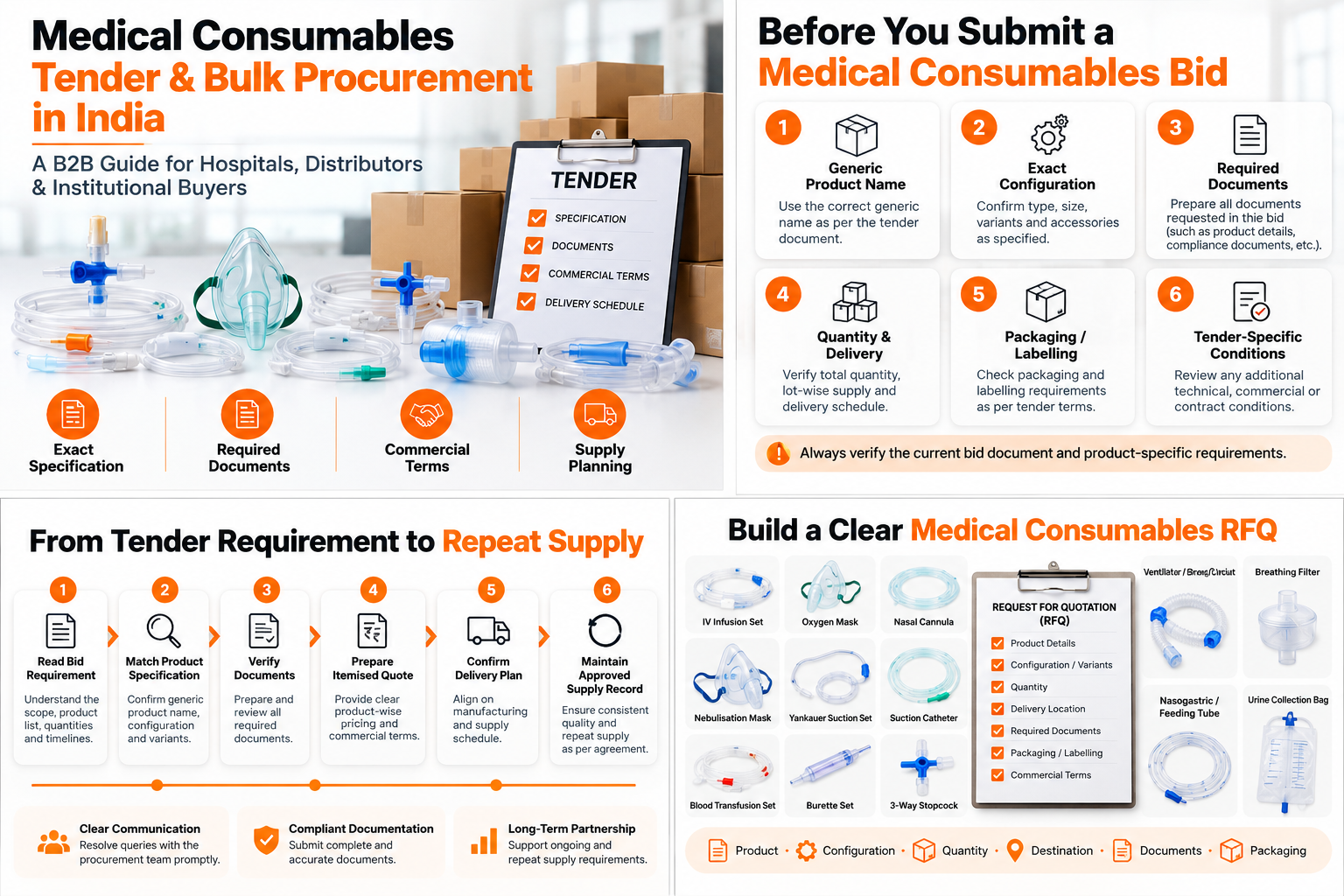
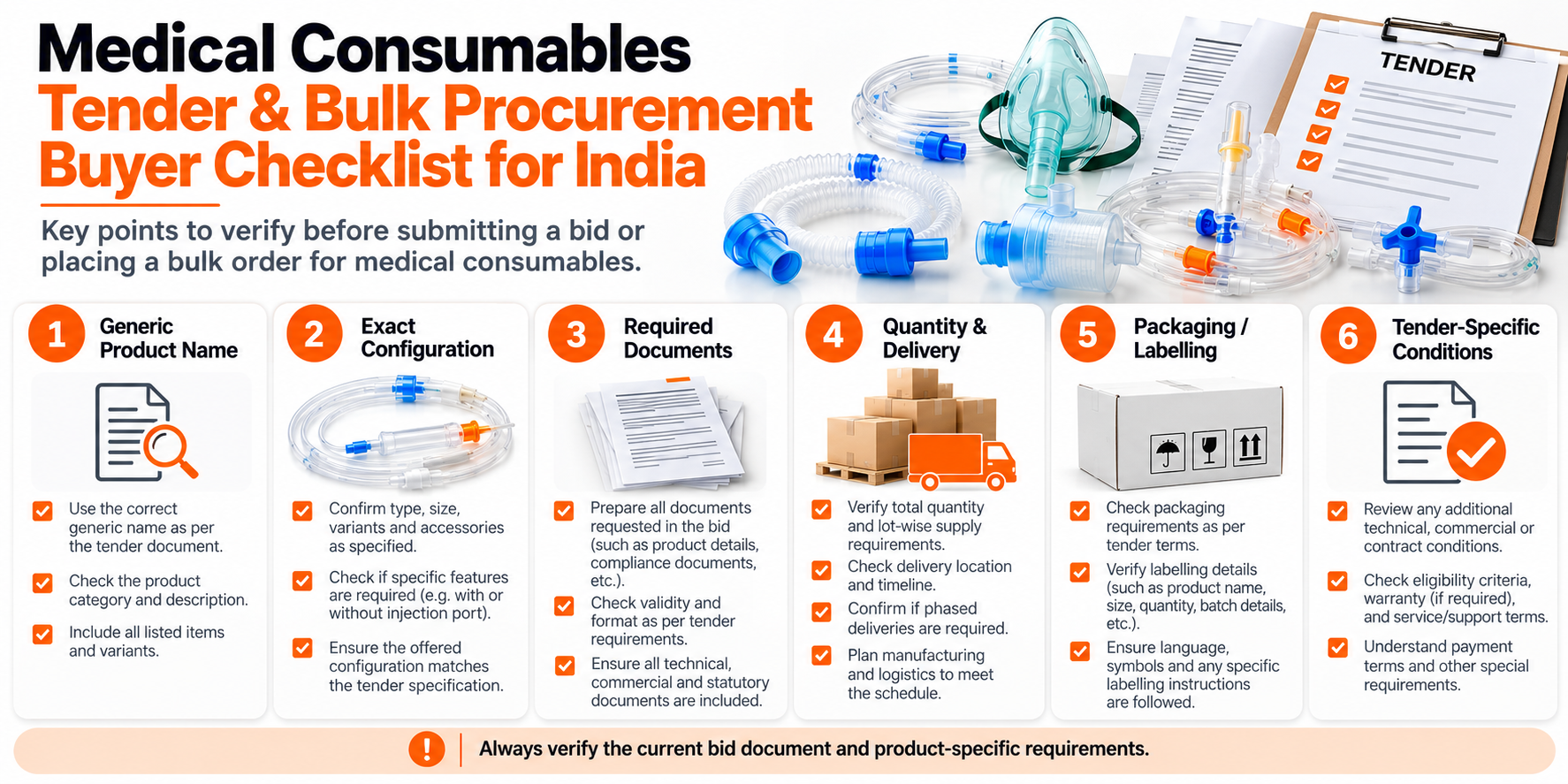
The starting point is always the current tender document or institutional RFQ. Confirm the generic device name, requested configuration, quantity, delivery location, required documentation, packaging or labelling conditions, commercial format and submission timeline.
1. Match the generic product name to the requirement
Use the generic product name prominently in internal evaluation and quotations. Brand names can help identify a manufacturer’s range, but institutional procurement normally begins with the device being requested.
For example, a requirement may call for an intravenous infusion set, oxygen mask, nasal cannula, nebulisation mask or urine bag. The offered item should be checked against the exact line-item description rather than selected from the generic name alone.
2. Confirm configuration before preparing the quote
Products within the same generic category may have different sizes, capacities, connectors, accessories or variants. Tender teams should map each requested line item to the corresponding documented product configuration before pricing it.
This is particularly important for products such as burette sets, blood transfusion sets, 3-way stopcocks, ventilator circuits and breathing filters. Never infer a specification that is not documented for the exact model being offered.
3. Build a bid-document checklist
Document requirements vary between tenders. A bid may request manufacturer information, regulatory documents, quality-system information, technical literature, declarations, commercial schedules or other evidence. Some institutional procurements may also include sample evaluation or OEM-related documentation.
Prepare a line-by-line checklist from the current tender rather than relying on a standard document pack. Confirm validity, naming consistency and requested format before submission.
4. Separate quality-system credentials from product requirements
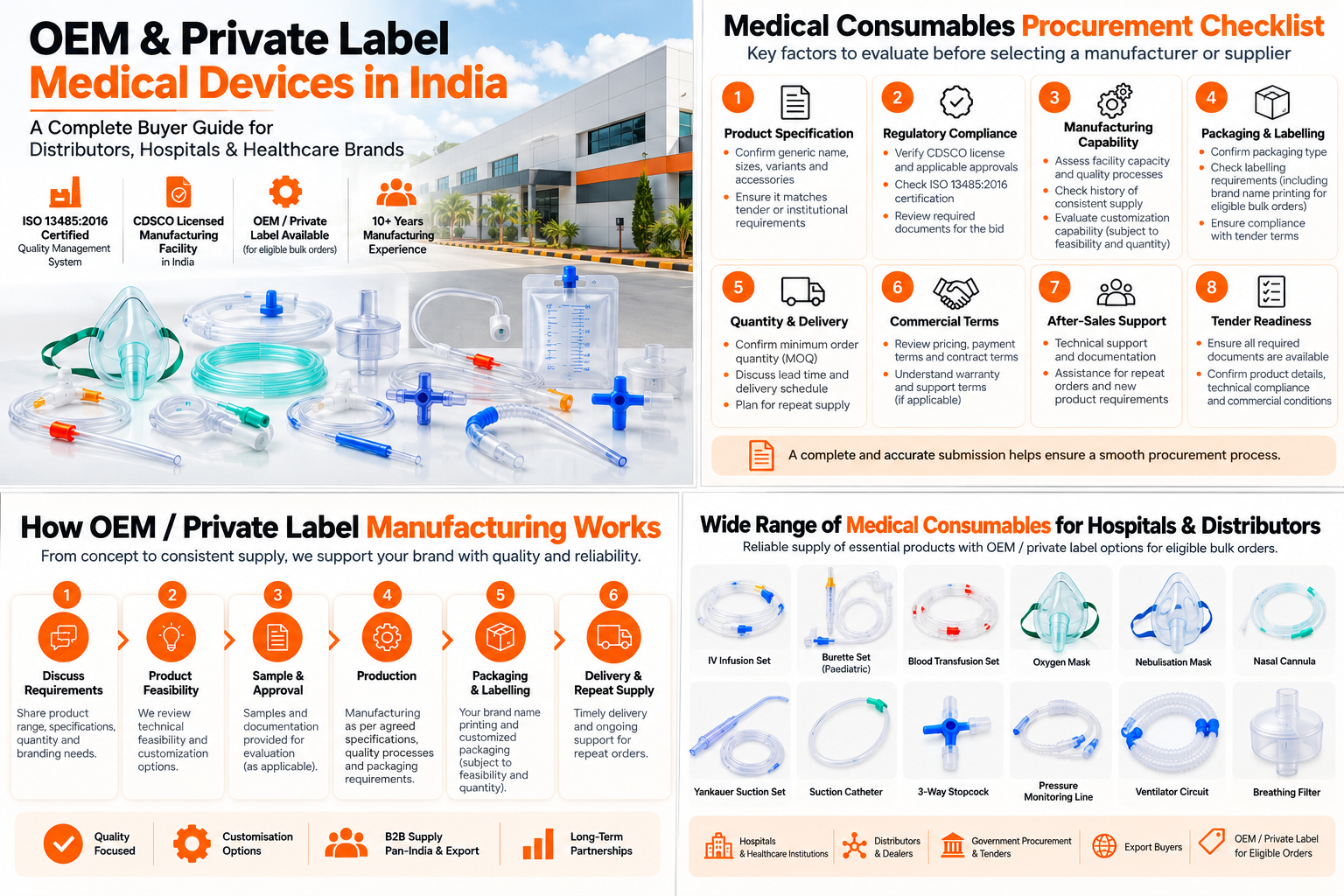
ISO 13485:2016 is the internationally recognised quality-management-system standard for medical-device organisations. It can be relevant to supplier qualification, but it should not be presented as automatic product approval.
Sicher Medik operates under an ISO 13485:2016 certified quality management system and manufactures at a CDSCO-licensed medical device manufacturing facility in India. Procurement teams should still verify the documentation applicable to each product and tender.