How to Choose a Medical Disposable Manufacturer in India

A 2026 B2B sourcing guide for hospitals, distributors, institutional buyers and OEM/private-label procurement

For hospitals, distributors, institutional procurement teams and private-label buyers, choosing a medical disposable manufacturer in India is not simply a matter of finding the lowest unit price. A stronger sourcing decision is usually based on regulatory status, quality-system discipline, documented product specifications, manufacturing capability, packaging, repeat-supply planning and commercial fit.

India’s medical-device market includes manufacturers, importers, distributors and contract suppliers. The Central Drugs Standard Control Organization (CDSCO) states that medical devices in India are regulated under the Drugs & Cosmetics Act and the Medical Devices Rules, 2017, with risk-based classification and licensing requirements depending on the device category. For B2B buyers, supplier verification is therefore an important part of procurement.

Why India is attracting medical-device sourcing interest

India continues to develop as a manufacturing and sourcing base for medical devices and hospital consumables. Domestic healthcare demand, export activity and medical-device manufacturing ecosystems are expanding the available supplier base. For buyers, this creates more choice; for manufacturers, it increases the importance of documented quality, reliable supply and product-specific expertise.

1. Start with the exact product requirement

Before comparing manufacturers, define the product clearly. Procurement specifications should cover the generic device name, intended use, size or capacity where relevant, sterility status, single-use or reusable status, packaging, connectors or accessories, and any required customization.

For example, a buyer sourcing a Yankauer suction set should verify tip configuration, tubing length, connector type, sterility, single-use status and packaging rather than relying on the product name alone. The same principle applies to oxygen masks, IV infusion sets and ventilator circuits.

2. Verify manufacturing and regulatory status

India’s regulatory framework for medical devices is administered by CDSCO and the relevant licensing authorities under the Medical Devices Rules, 2017. Buyers should verify the manufacturer’s current licence and the regulatory status applicable to the product being procured.

This is especially important for tenders, institutional procurement, export documentation and long-term distributor agreements.

3. Check the quality management system

ISO 13485 is the internationally recognized quality-management-system standard for organizations involved in medical devices. For B2B buyers, an ISO 13485-certified quality management system can be an important supplier-qualification factor because it provides a structured framework for documentation, process control, traceability, corrective action and quality management.

Sicher Medik manufactures under an ISO 13485:2016 certified quality management system and operates a CDSCO-licensed medical device manufacturing facility in India. Buyers should still verify the current product-specific documentation required for their procurement process.
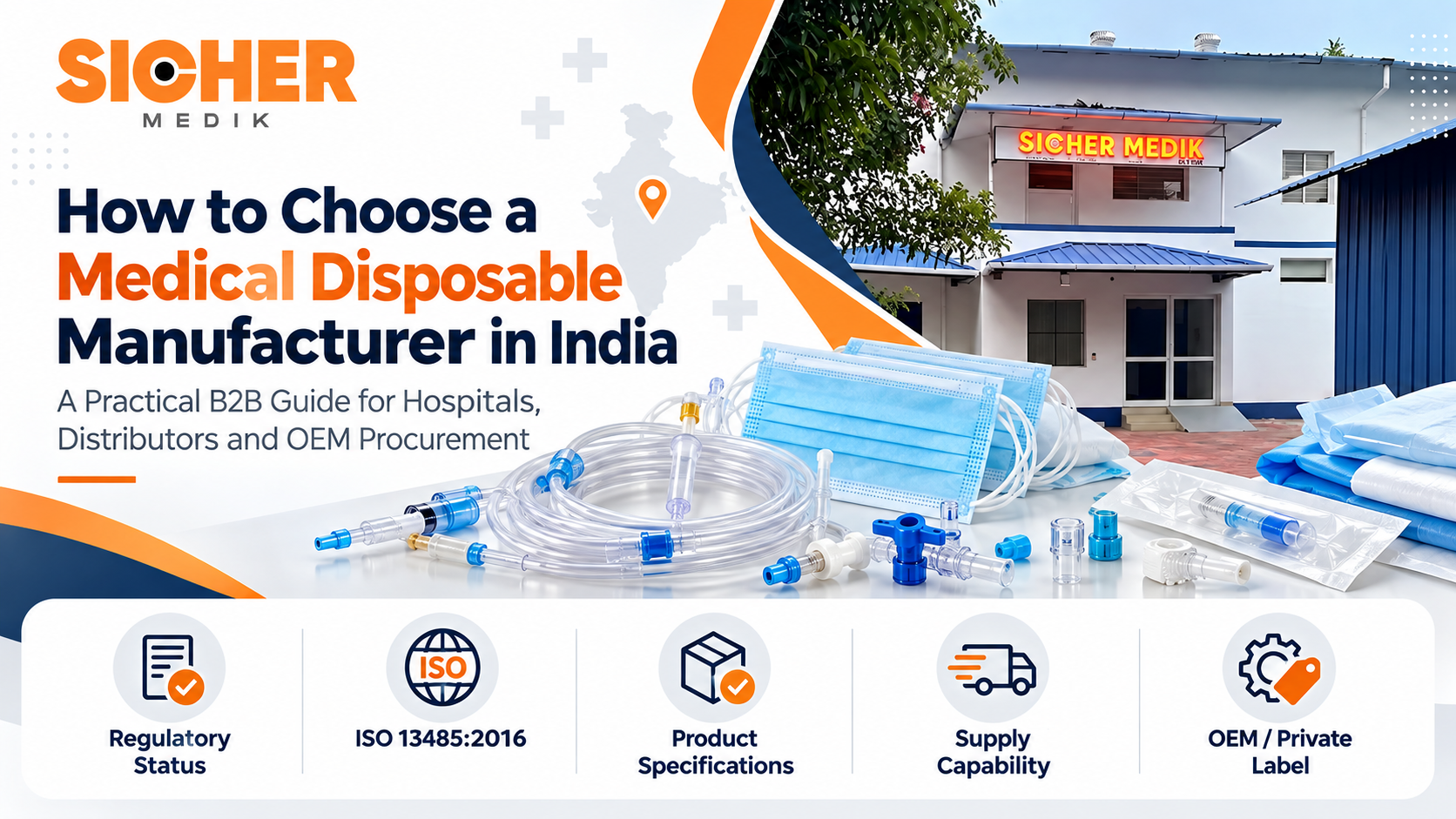
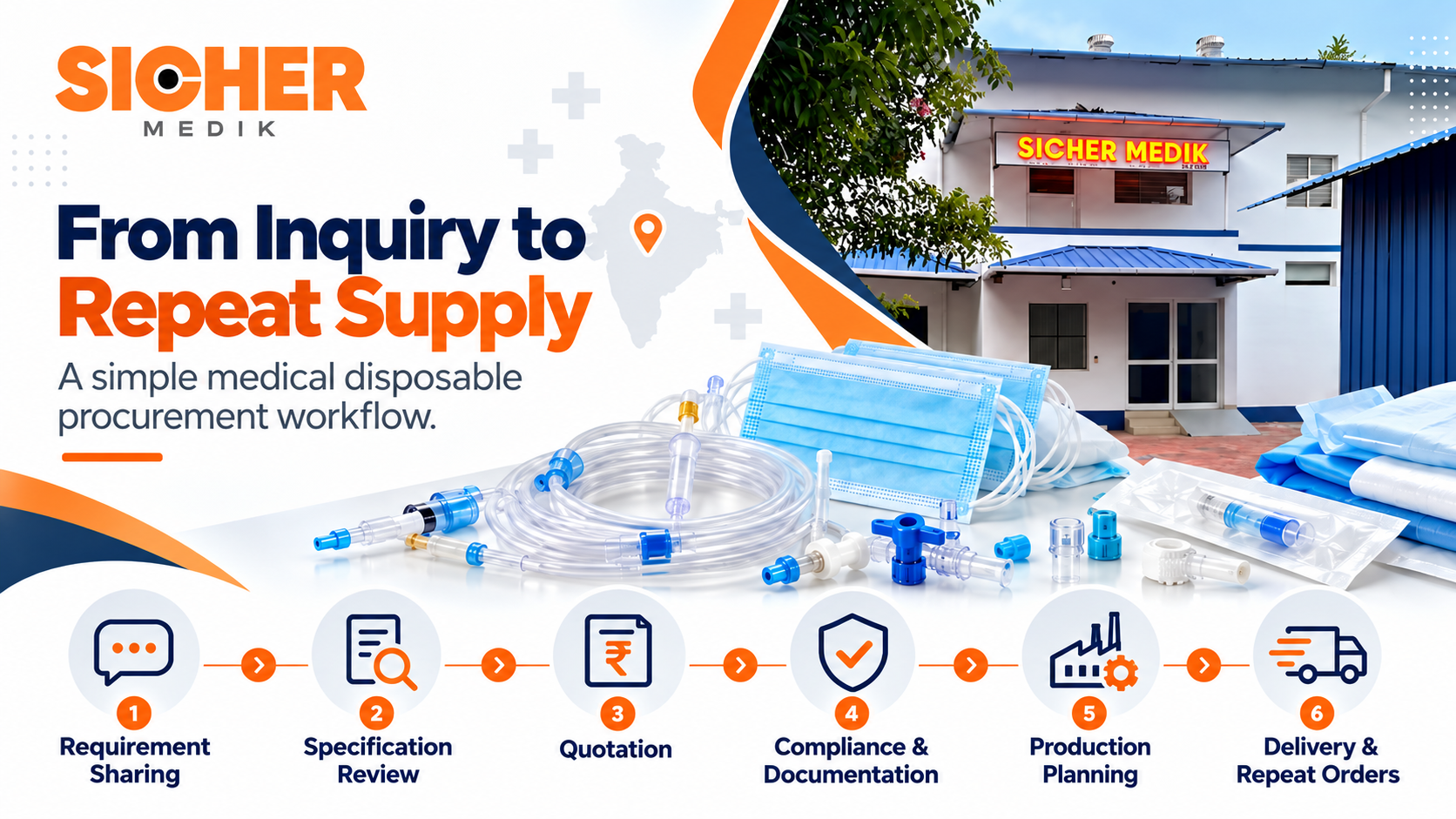
Infographic guide to choosing a medical disposable manufacturer in India for hospitals, distributors and OEM buyersMedical disposable procurement workflow from requirement sharing to repeat supply

4. Assess consistency, not only sample quality

A pre-production sample can help confirm configuration and presentation, but long-term B2B procurement depends on consistency across repeated batches. Distributors and institutions should consider how the manufacturer controls specifications, packaging, labeling, inspection and production records over time.

This is particularly important for frequently reordered disposables such as suction catheters and closed wound suction sets.

5. Review packaging, sterility and logistics requirements

Packaging is part of the product specification. Buyers should confirm the individual pack, secondary packaging, carton configuration, label information and any storage or transport considerations that apply to the product.

Where a product is supplied sterile, procurement teams should verify the documented sterilization status and the information provided by the manufacturer for that specific device.

6. Evaluate the manufacturer’s B2B supply capability

Hospitals and distributors often need repeat orders rather than isolated purchases. Before onboarding a supplier, discuss expected volumes, lead times, order frequency, packaging requirements, delivery destinations and any tender-driven demand peaks.

Sicher Medik supplies hospitals, healthcare institutions, dealers, distributors, government and corporate procurement buyers, export customers and OEM/private-label clients. The company has more than 10 years of medical-device manufacturing experience and supports bulk requirements subject to product, quantity and commercial feasibility.

7. Consider OEM and private-label requirements early

For distributors and brand owners, OEM or private-label production may include packaging artwork, label content, carton markings, product-code alignment, documentation and minimum-order planning.

Sicher Medik supports OEM and private-label manufacturing for eligible bulk orders, subject to quantity, technical feasibility and commercial agreement. Buyers should share branding, packaging and market requirements early so feasibility can be reviewed before production planning begins.

8. Use product documentation to reduce sourcing errors

A clear product page, specification sheet and instruction leaflet can help procurement teams compare the requested product with the manufacturer’s documented configuration. This reduces ambiguity during quotation, sampling and order confirmation.

9. Kerala and pan-India procurement considerations

For buyers in Kerala and elsewhere in India, the sourcing decision may also include delivery planning, distributor support, institutional documentation and the ability to service repeat requirements across multiple locations. Local market knowledge can be useful, but it should complement regulatory and technical verification.

Frequently asked questions

What should I check before choosing a medical disposable manufacturer in India?

Check the exact product specification, applicable regulatory status, manufacturing licence, quality-management-system credentials, packaging, sterility information where relevant, supply capability and documentation required for your procurement process.

Is ISO 13485 important when sourcing medical devices?

ISO 13485 is a medical-device quality-management-system standard and is commonly considered during supplier qualification. It does not replace product-specific regulatory verification.

How do I verify whether a medical-device manufacturer is licensed in India?

Request current licensing documentation from the manufacturer and verify the regulatory requirements applicable to the specific device.

Can medical disposables be supplied under a private label?

Private-label or OEM supply may be available depending on the manufacturer, product, order quantity and technical feasibility. Packaging, labeling and market-specific requirements should be agreed before production.

What information should distributors provide when requesting a bulk quotation?

Provide the generic product name, required configuration, quantity, destination, packaging preference, expected order frequency and any OEM/private-label requirements.

Does Sicher Medik supply across India?

Sicher Medik supports B2B supply to hospitals, institutions, dealers and distributors across India, including Kerala, subject to commercial terms, product availability and order requirements.

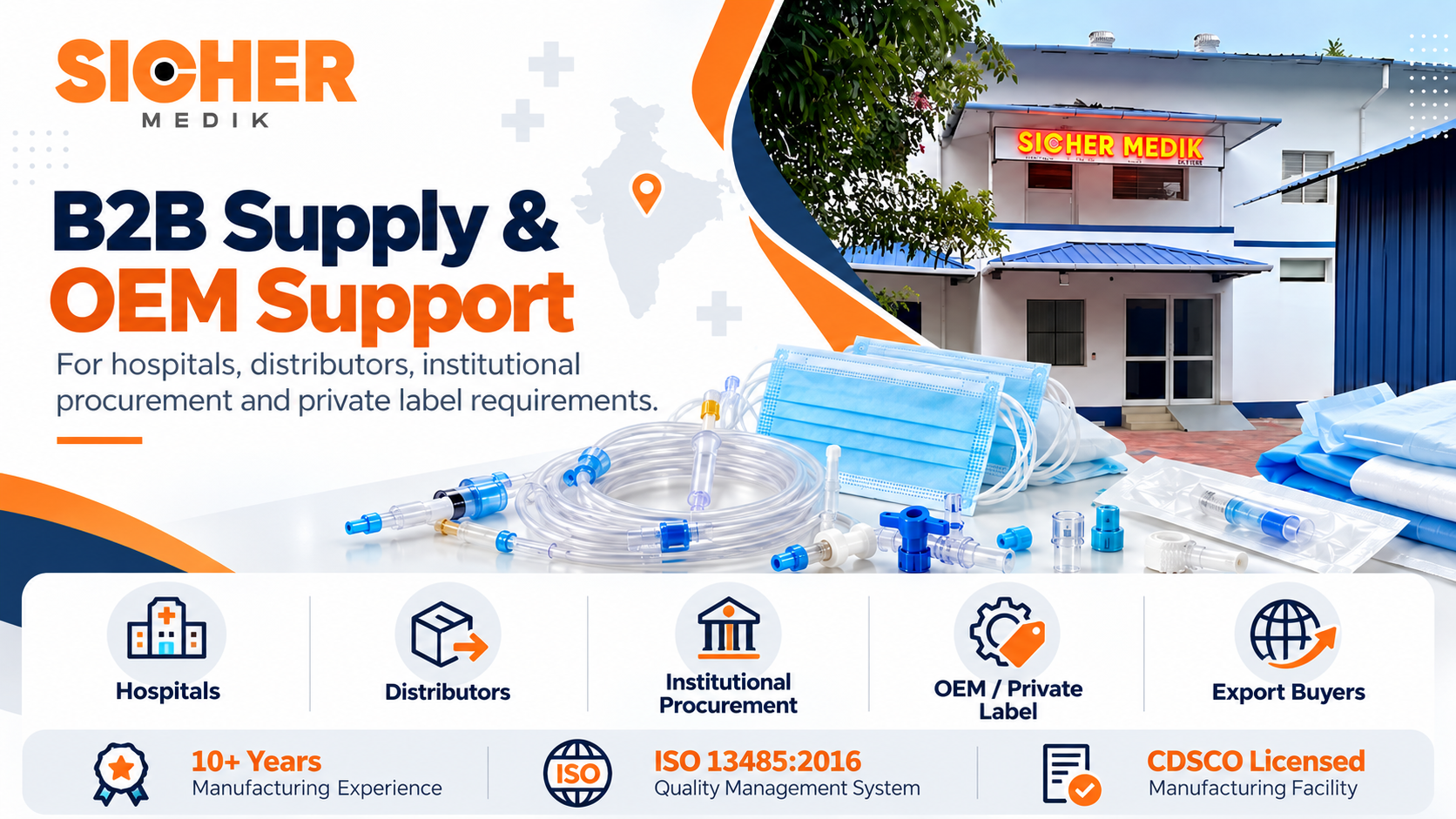
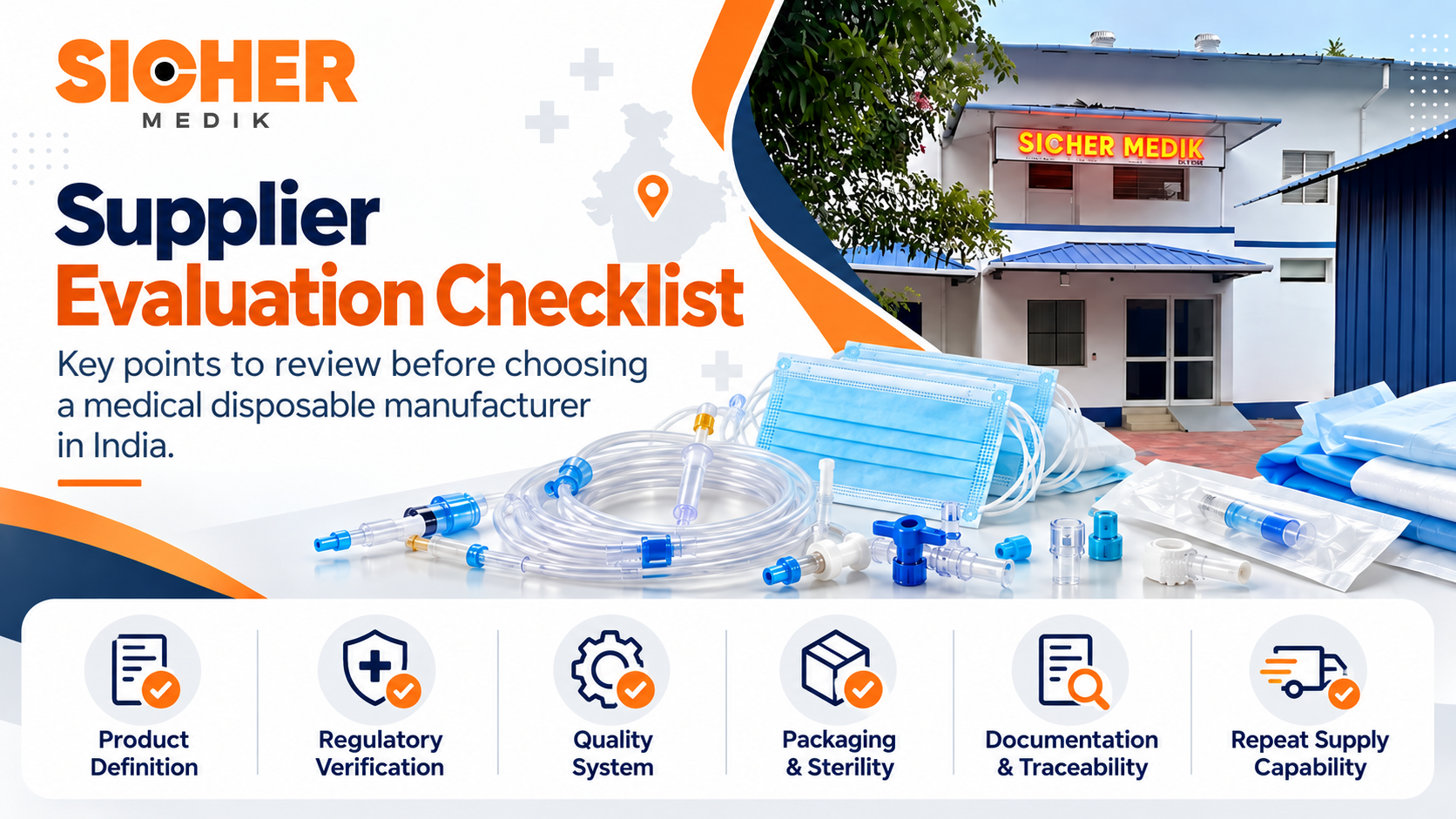
Infographic showing B2B medical disposable supply and OEM private label supportMedical disposable manufacturer supplier evaluation checklist for bulk procurement

Conclusion: choose a manufacturer as a long-term supply partner

The strongest B2B sourcing decision is based on documented fit: the right product specification, appropriate regulatory status, a disciplined quality system, repeatable manufacturing, suitable packaging and dependable commercial support.

Sicher Medik is an Indian medical-device manufacturer with more than 10 years of manufacturing experience, an ISO 13485:2016 certified quality management system and a CDSCO-licensed medical device manufacturing facility. The company supports hospitals, distributors, institutional buyers, export customers and eligible OEM/private-label requirements.