.svg)

OEM & Private Label Medical Devices in India: Buyer Guide
A practical sourcing guide for distributors, healthcare brands, importers and institutional buyers evaluating OEM and private-label medical devices in India
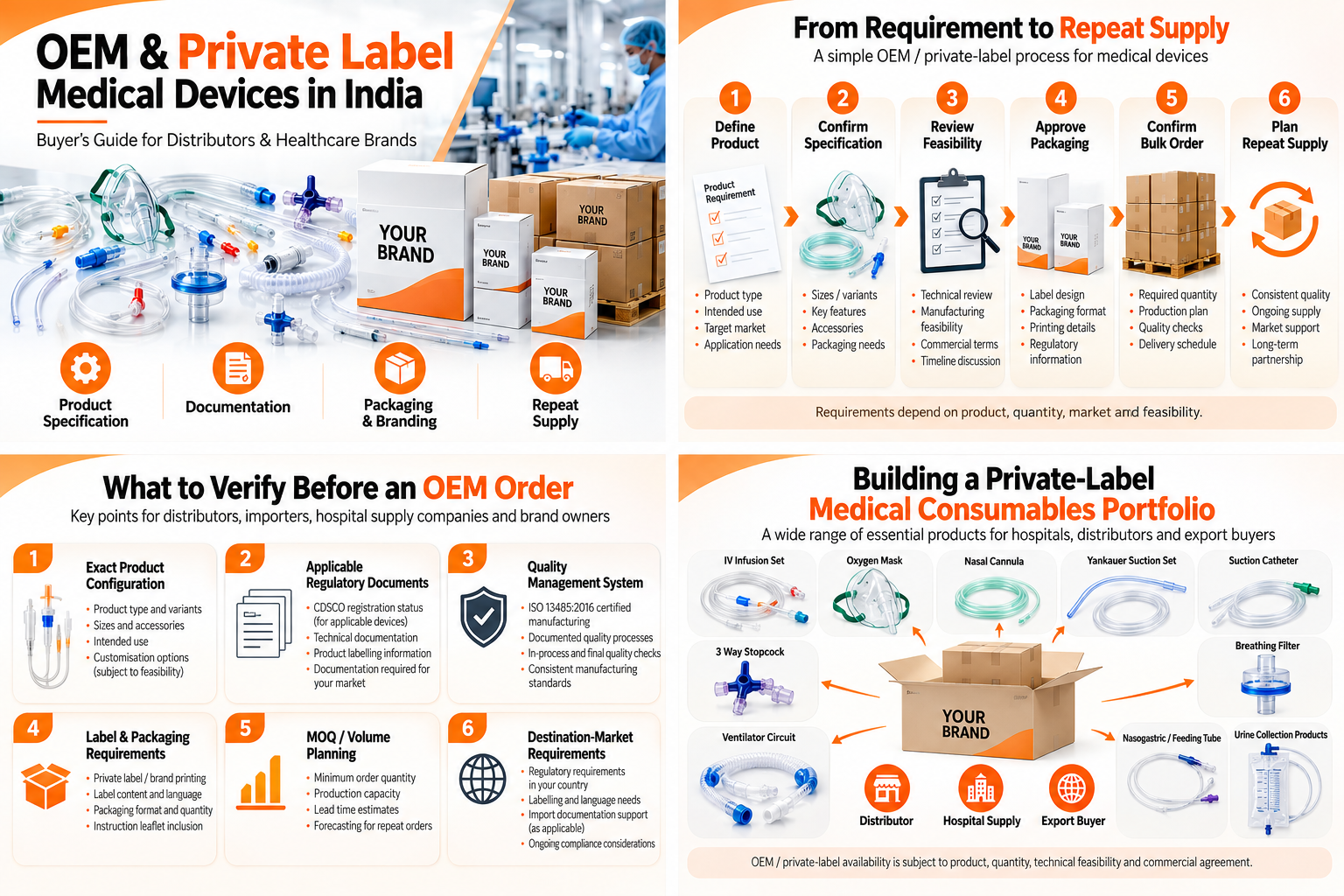
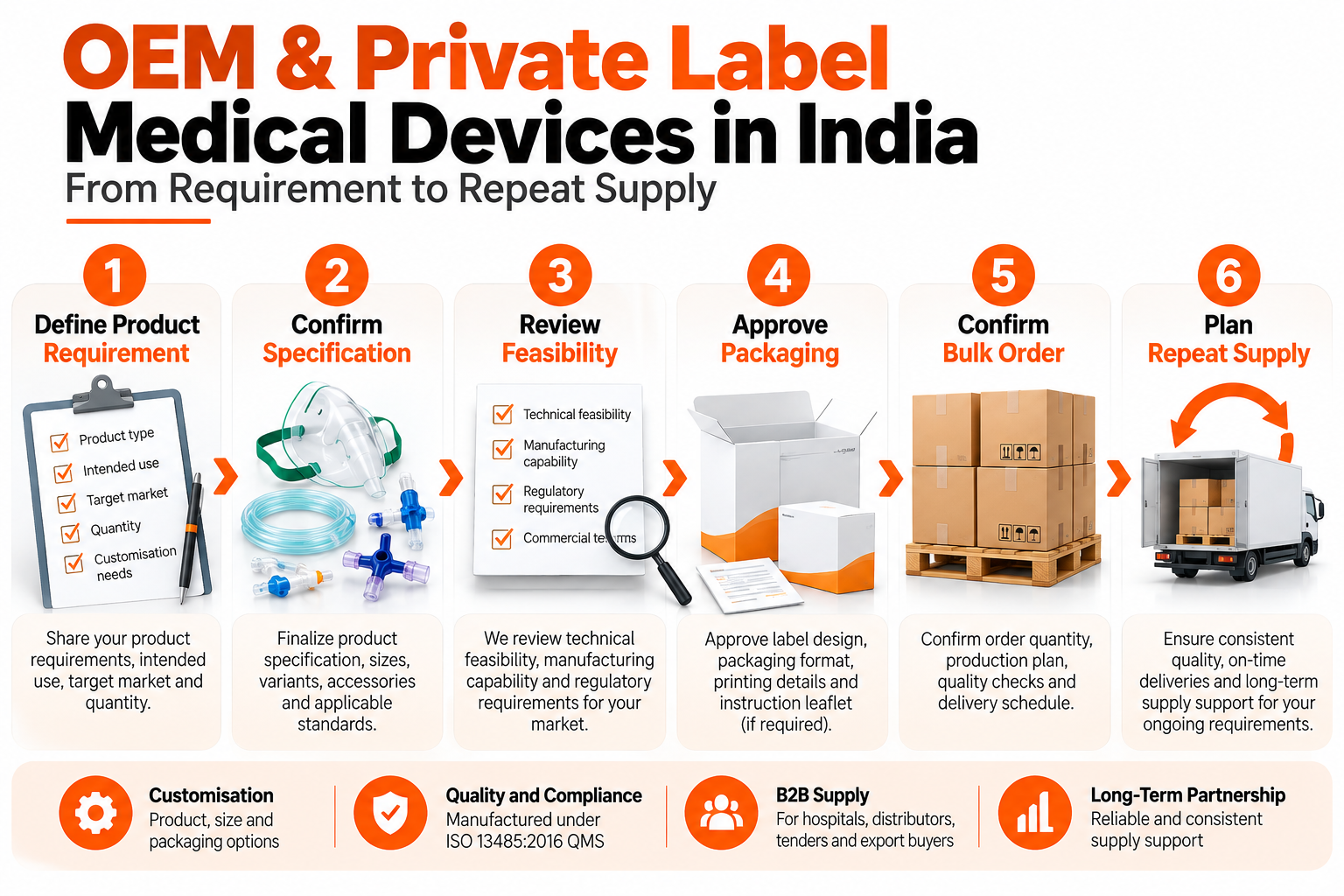
For distributors, healthcare brands, importers and institutional buyers, OEM and private-label medical device sourcing in India can be a practical way to build a product range without establishing a separate manufacturing facility. But a successful private-label programme requires more than adding a brand name to a pack. Buyers need to define the exact product, confirm the applicable documentation, review packaging and labelling needs, plan order volumes and make sure the supplier can support repeat requirements.
India’s medical-device framework is governed by the Medical Devices Rules, 2017, with requirements that vary according to the device and its regulatory classification. That means an OEM buyer should evaluate both the manufacturer and the specific product being sourced rather than assuming that one licence, certificate or approval automatically covers every device or export market.
What do OEM and private label mean in medical devices?
In a B2B medical-device context, OEM generally refers to manufacturing products for another company according to an agreed specification and commercial arrangement. Private label usually refers to supplying an eligible product under the buyer’s own brand or approved packaging identity. The exact arrangement can vary by product, quantity, technical feasibility, packaging requirement and destination market.
Sicher Medik supports OEM and private-label requirements for eligible bulk orders, subject to technical and commercial feasibility. Buyers should therefore begin with a clear requirement rather than assuming that every product or customization option is automatically available.
1. Define the product requirement before discussing branding
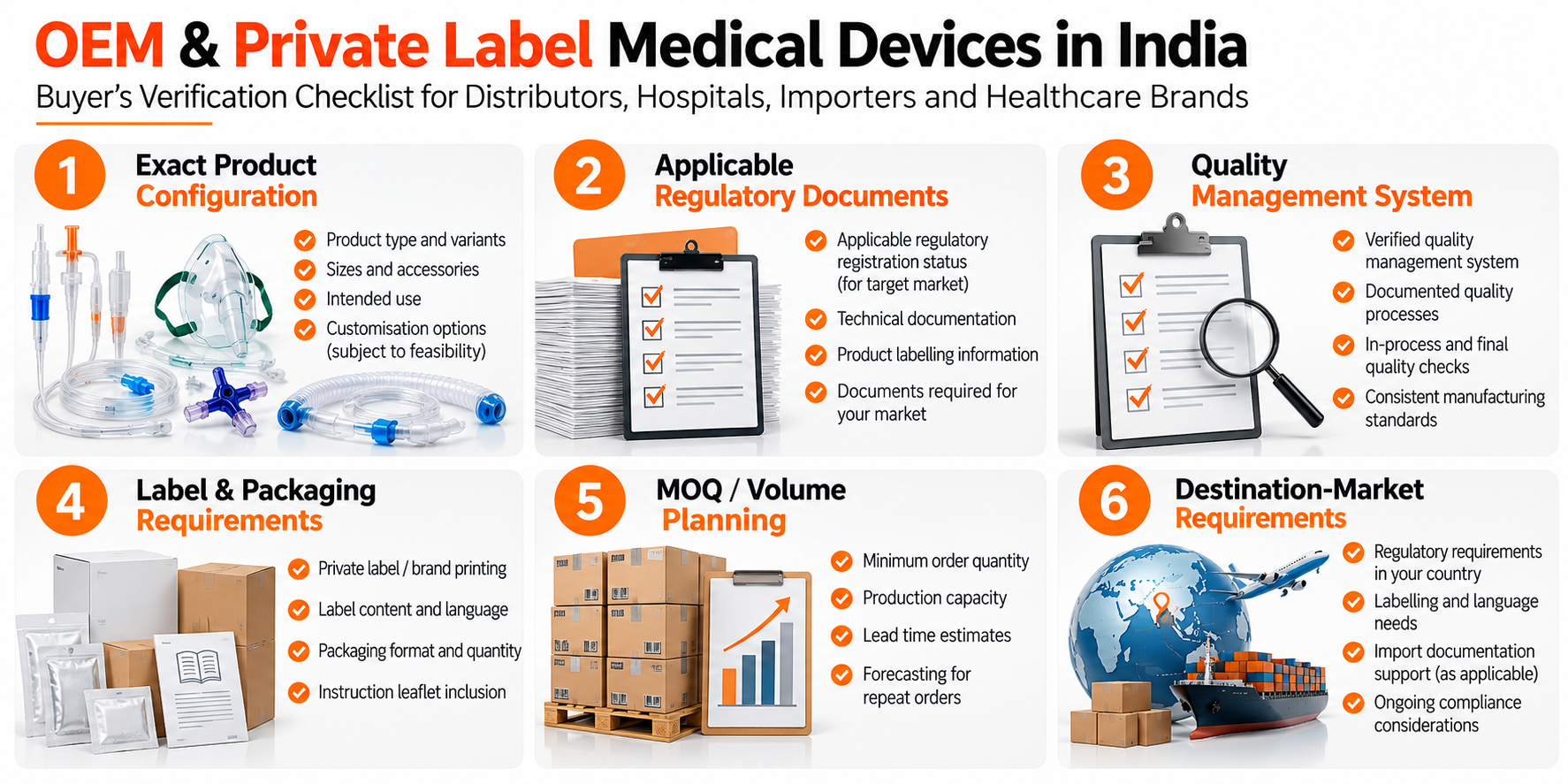
The first step is to identify the generic product and the exact configuration required. A useful enquiry should state the product name, intended use, required size or variant where relevant, quantity, destination, packaging preference and any specific labelling or branding requirement.
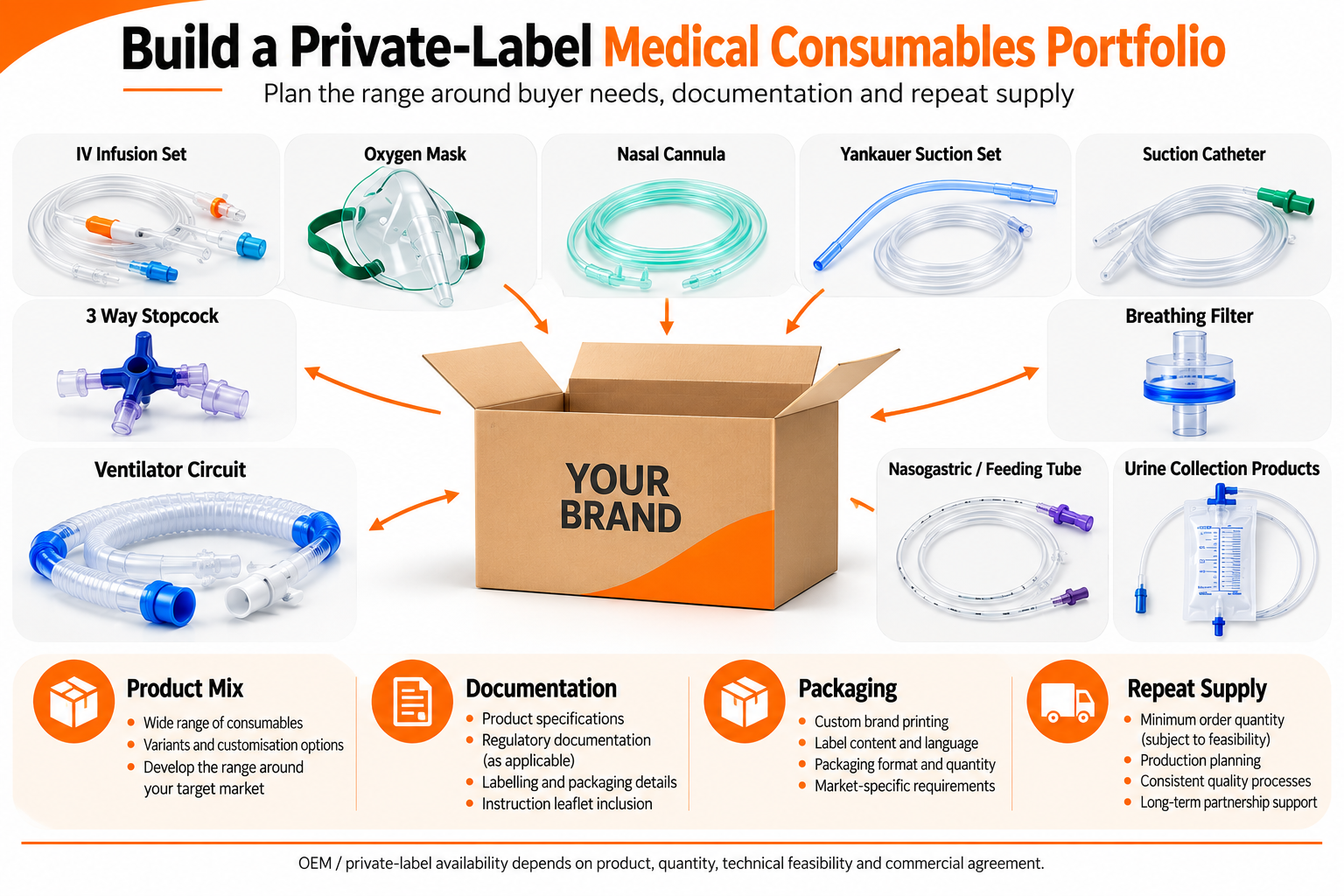
For example, a distributor evaluating an intravenous infusion set should first confirm the required configuration before discussing private-label artwork. The same approach applies to an oxygen mask, nasal cannula, Yankauer suction set or suction catheter.
2. Confirm the exact specification and customization scope
OEM sourcing works best when both parties are working from a documented specification. Buyers should confirm the model, size or capacity where applicable, components, connectors, packaging format and any other requirement that materially changes the product.
Customization should be discussed separately from the base product specification. Depending on the product and order volume, customization may include approved brand printing, label content, secondary packaging or carton identification. It should not be assumed that every physical design change is feasible simply because private labelling is available.
3. Review the regulatory documents applicable to the product
India regulates medical devices under the Medical Devices Rules, 2017. Buyers should request the current documentation that is relevant to the specific product and procurement arrangement. The exact requirement can depend on the device category, regulatory classification, manufacturing route and destination market.
For export or cross-border private-label supply, the importing country may also require its own registration, label content, language, importer information or supporting documentation. These requirements should be identified before artwork approval and production planning.
4. Evaluate the manufacturer’s quality-management system
ISO 13485:2016 is the internationally recognised quality-management-system standard for medical-device organisations and remains current. A quality-management system is relevant to areas such as documentation, production controls, traceability and corrective action, but it should not be treated as a substitute for product-specific regulatory verification.
Sicher Medik operates under an ISO 13485:2016 certified quality management system and manufactures at a CDSCO-licensed medical device manufacturing facility in India. For B2B procurement, buyers should still verify the documentation required for the exact device and transaction.