
Nebulizer Mask Kit Procurement Guide for Hospitals in India
Adult and paediatric kit specifications, chamber, tubing, sterility options and B2B purchasing checks.
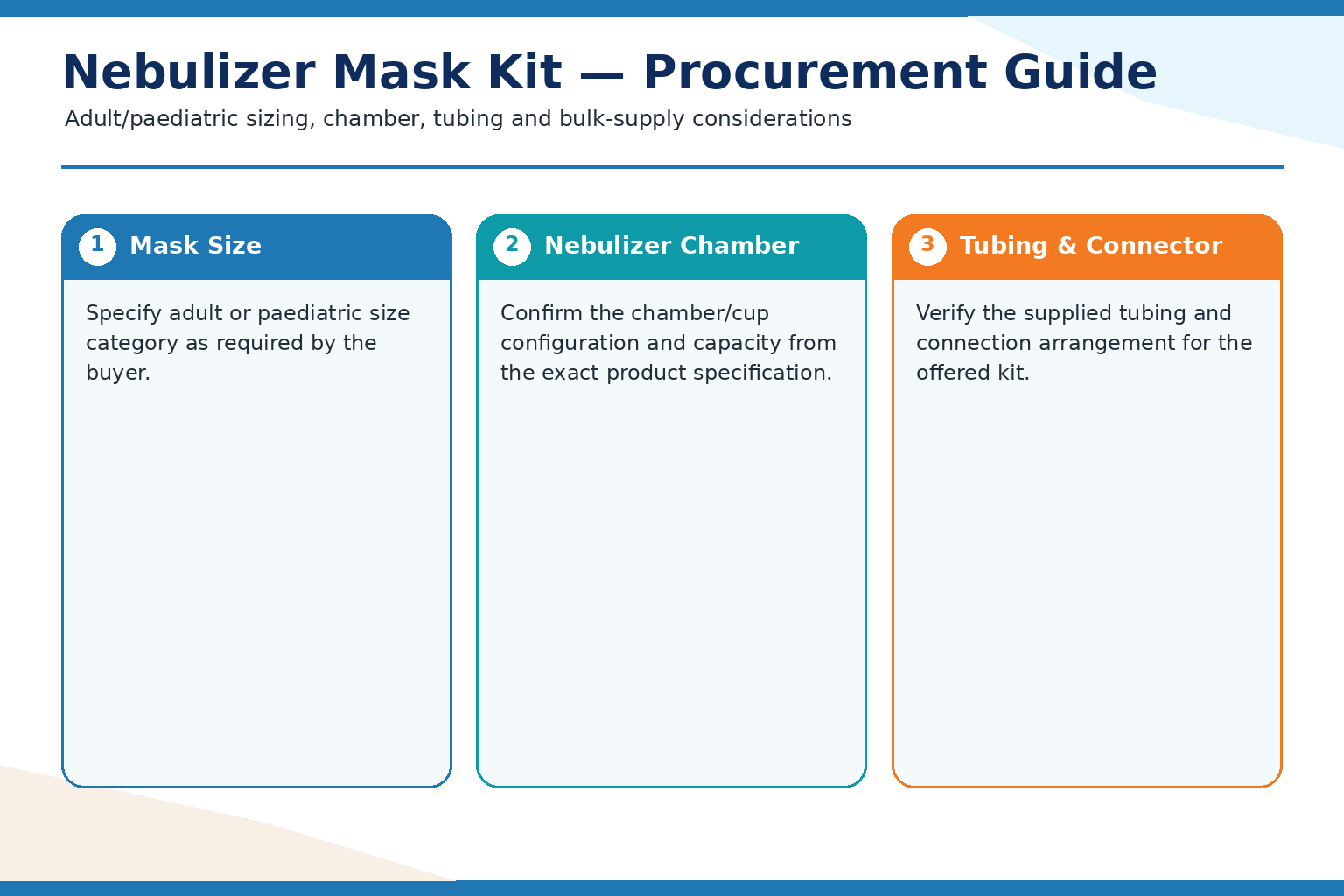
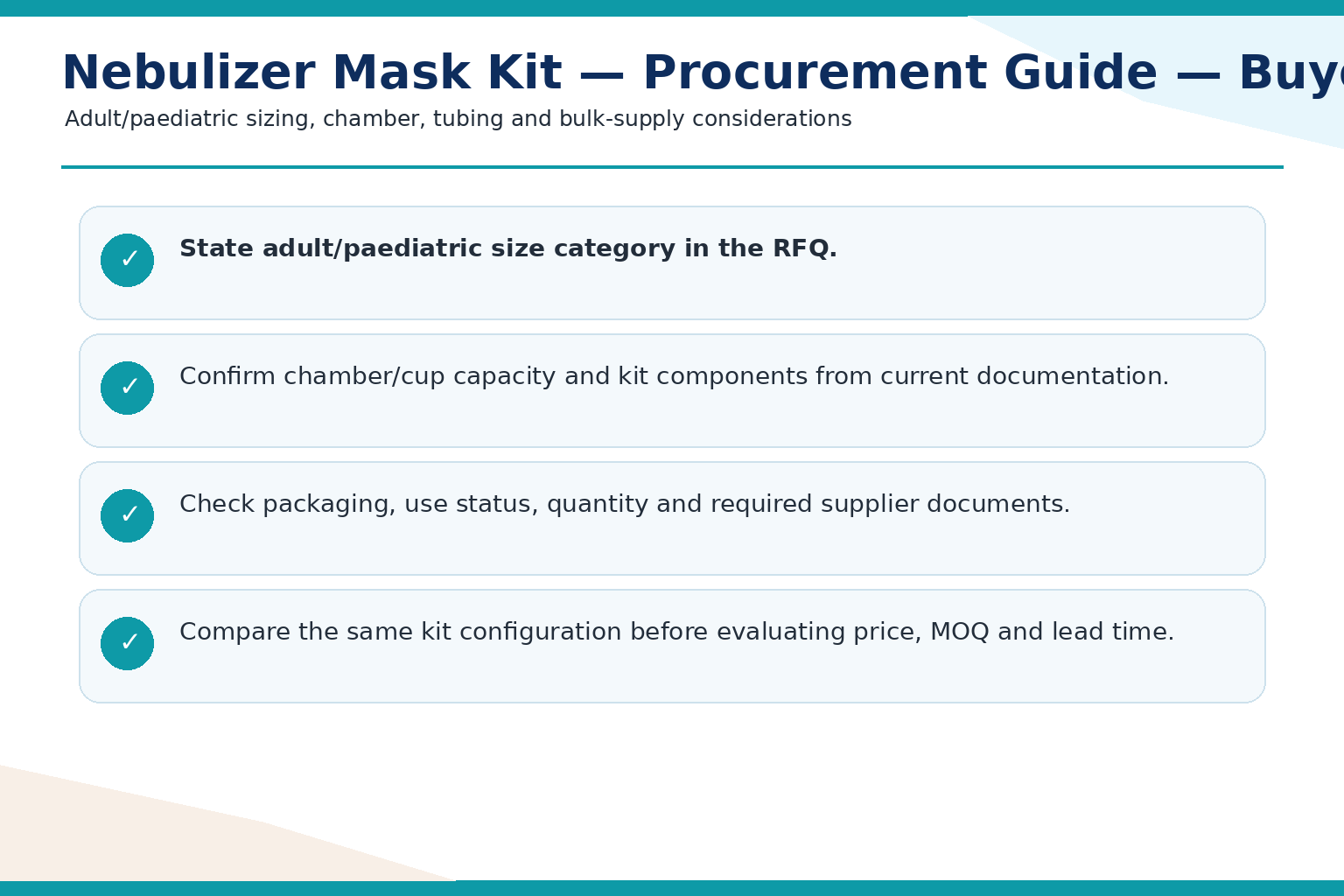
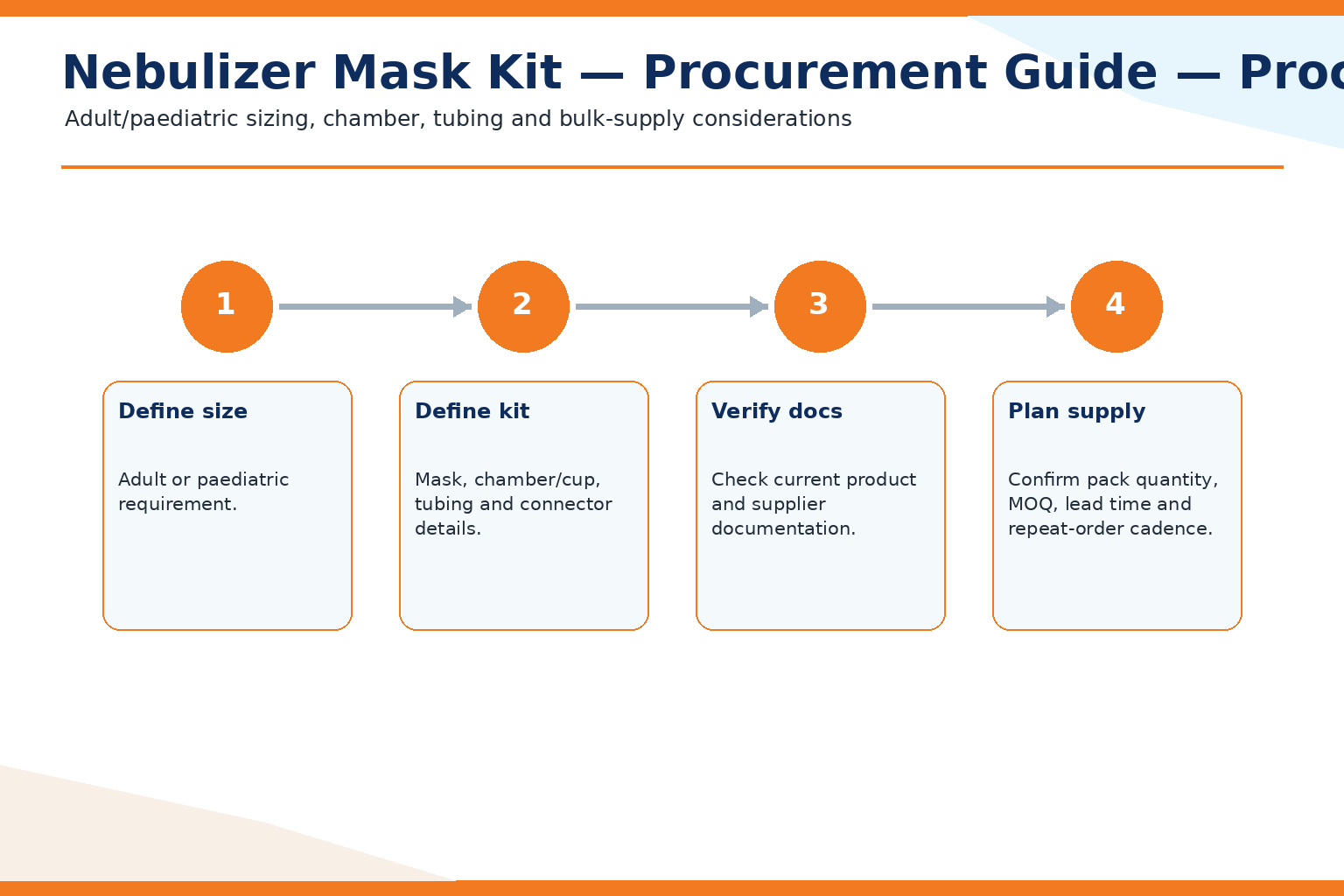
When a hospital buys a nebulizer mask kit, the purchase specification needs to describe more than “adult mask” or “paediatric mask.” A complete procurement record should identify the mask size, medication chamber, tubing, connection requirements, sterility option, unit packaging and documentation. These details help hospital groups, distributors and tender teams compare quotations for the same intended configuration.
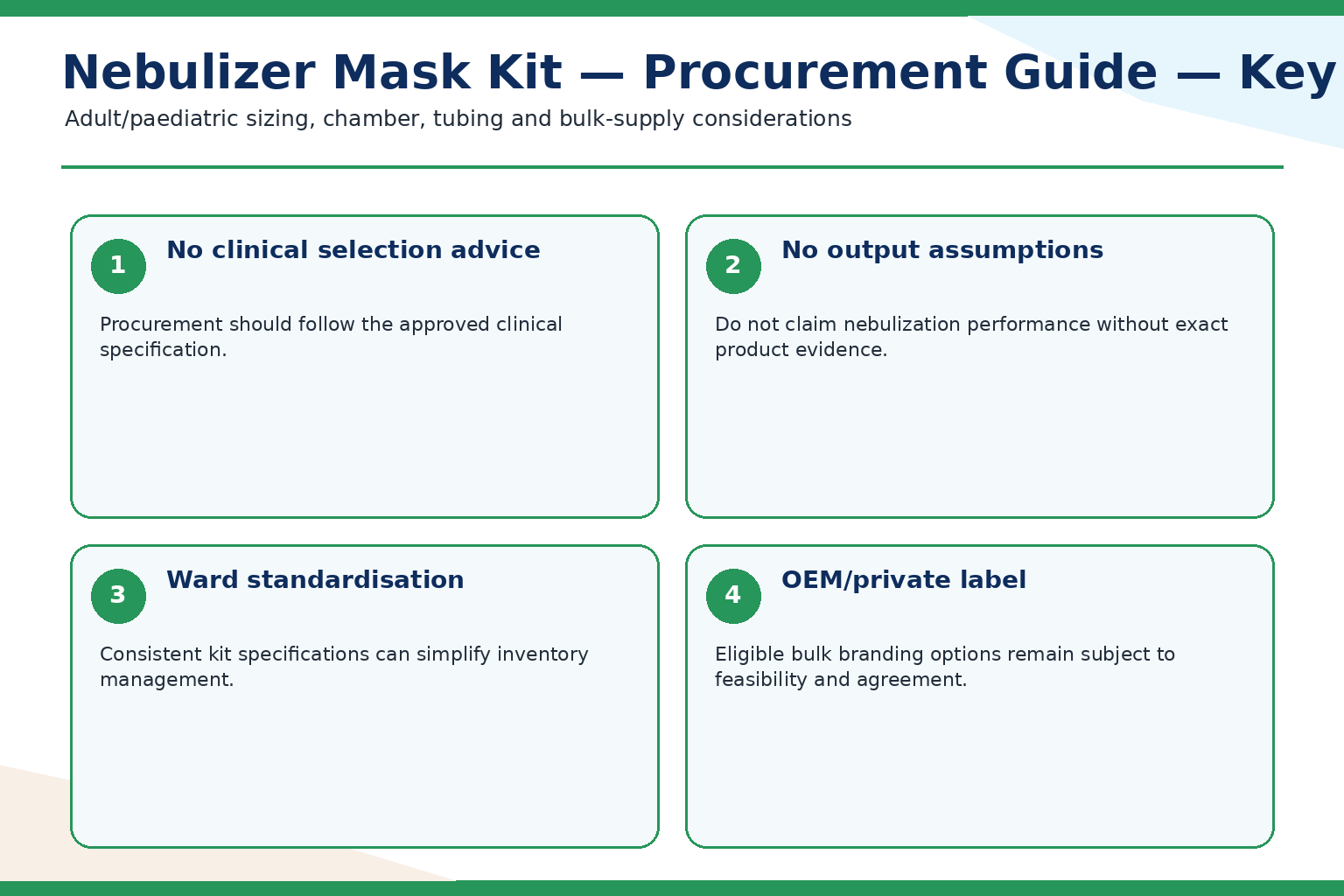
This guide focuses on B2B purchasing in India, including Kerala. It is not clinical advice about drug selection, dose, driving gas or treatment technique; those decisions belong to qualified professionals and the applicable instructions for use.
What is included in a nebulizer mask kit?
A nebulizer mask kit generally combines a face mask, medication chamber and supply tubing for use with compatible nebulization equipment. Buyers should distinguish a complete kit from a replacement mask or chamber-only quotation. A low quoted unit price is not meaningful unless both suppliers offer equivalent contents.
The Sichmist® nebulizer mask kit from Sicher Medik documents a soft medical-grade PVC mask, nebulizer chamber, flexible tubing and adjustable elastic strap. The current product page identifies adult and paediatric options. Exact configuration and packing should be reconfirmed against the latest quotation.
1. Specify adult and paediatric requirements separately
Adult and paediatric mask sizes should be separate line items in a hospital RFQ, even if a supplier markets both under one product family. Ask the clinical department to approve the relevant size and fit requirements before procurement. Do not assume that one mask size is suitable for every patient within a broad age group.
For multi-site hospital groups, record which departments require each variant and whether the distribution centre needs separate cartons or clearly labelled mixed orders. A repeat-order system works better when each approved size has its own internal SKU.
2. Verify chamber capacity against the exact product
Chamber capacity is a key product-identification attribute, not a substitute for clinical suitability or validated aerosol performance. Sicher Medik’s current Sichmist® listing documents a 2–10 ml chamber capacity. Procurement teams should ask whether the quoted configuration matches the approved specification and request current technical documentation where needed.
Do not interpret chamber capacity as a recommended medication volume. Avoid copying competitor claims about particle size, output rate or residual volume into a tender unless they are independently supported for the exact model.
3. Check tubing and connector compatibility
The current Sichmist® product listing identifies flexible, kink-resistant tubing with a standard length of 2 metres. That information is useful for comparing quotations, but the buyer should still confirm the required connection to the intended equipment. “Universal” or “standard” wording is not a substitute for a compatibility check.
If the hospital uses several nebulizer systems, the technical team can document which approved kit configuration works with each system. Keep sample approval and supplier documentation with the procurement record rather than relying on verbal assurances.